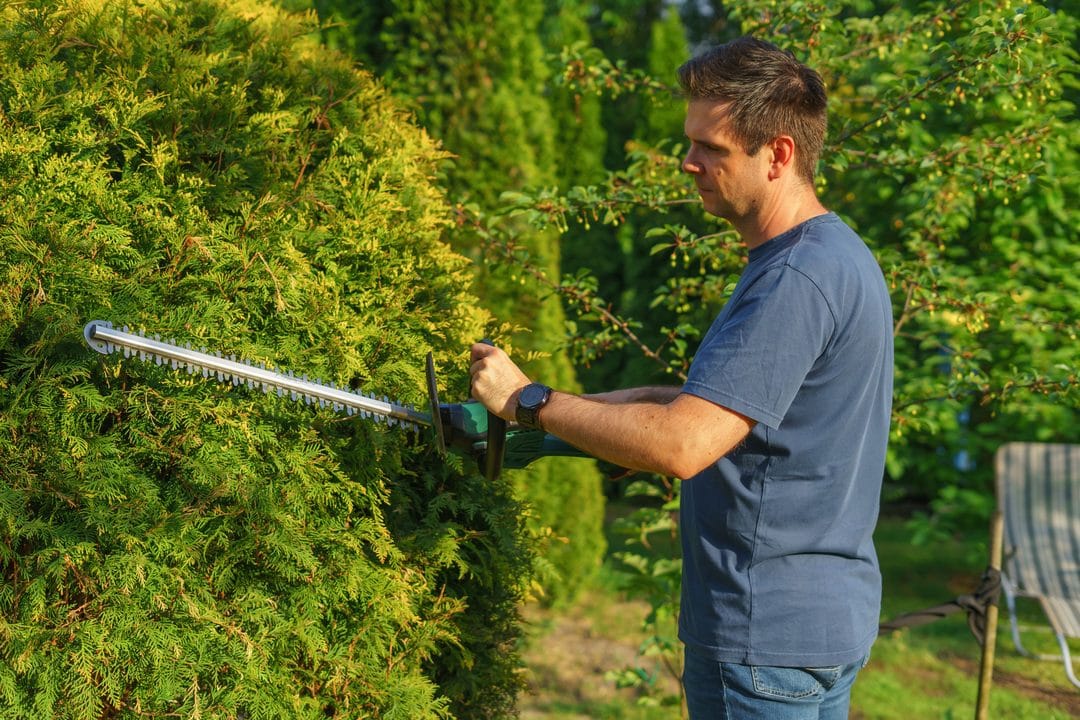
Somewhere in a shed in most British gardens, a hedge trimmer has been sitting untouched since March, and there's a reason for that beyond laziness. Cutting a hedge while birds are nesting in it is a criminal offence in this country, and August is the month that restriction finally starts to lift — though not in the neat, single-date way most people assume.
What the law actually says
No date on a calendar makes a nest empty.
Under Section 1 of the Wildlife and Countryside Act 1981, it's an offence to intentionally damage or destroy the nest of any wild bird while it's being built or in use. There's no fixed calendar date written into the Act itself — nesting season is a biological fact, not a legal one — but the RSPB and most conservation bodies treat 1 March to 31 August as the practical window to avoid, because that's when the overwhelming majority of UK garden birds are sitting on eggs or feeding chicks. Blackbirds, robins, wrens and dunnocks are the usual suspects in a garden hedge, and a hedge that looks completely still from the outside can easily be hiding an active nest three-quarters of the way up.
Here's the part that catches people out every year: 31 August isn't a green light that applies uniformly to every hedge in every garden. Some species — wood pigeons especially — nest well into September, and a hedge that had activity in July doesn't automatically clear itself just because the calendar flipped a page. A cool, wet spring can push an entire season's nesting back by two or three weeks, which means a hedge that would normally be clear by late August might still have chicks in it in a bad year. Before you get the trimmer out, walk the hedge slowly and look for movement, listen for chirping, and check for the tell-tale sight of an adult bird repeatedly entering and leaving the same spot. If you find anything, wait. The offence carries an unlimited fine in the most serious cases, and while a homeowner trimming their own privet is never going to face prosecution for an honest mistake, professional gardeners and landscapers who ignore an obvious active nest are the ones who actually get pursued. Local wildlife trusts and the RSPB's own advice line will usually help if you're genuinely unsure whether a nest is still active, and it costs nothing to ask before you cut.
Farmland hedgerows are a different, stricter case
If your property borders agricultural land, a paddock, or sits in a genuinely rural setting, a separate piece of legislation might apply on top of the nesting rules. The Hedgerows Regulations 1997 protect certain hedgerows — generally those over 20 metres long, on or next to land used for agriculture, forestry or common land — from being removed without consent from the local planning authority. This doesn't cover the leylandii along your suburban boundary fence, and it's about removal rather than routine trimming, but it catches out a surprising number of people who've bought a rural property and assumed the hedge in the field behind it was theirs to clear.
Once you're clear to cut, what it actually costs
What most people picture when they reach for the trimmer in August is a light tidy — knocking back the season's growth and squaring off the top and sides. That's the right instinct for most garden hedges, and it's genuinely different from the hard renovation cut that brings an overgrown hedge back into shape, which is better done during winter dormancy, roughly November to February, when the plant isn't putting energy into new growth and the bare structure is easier to see and shape. Beech and hornbeam are a slight exception: because they hold their dead leaves through winter if trimmed in late summer, a lot of gardeners deliberately time their one cut of the year for August precisely to get that effect. Privet and box, by contrast, usually want two cuts a year to stay sharp — one in early summer before nesting is fully under way is off the table this year, so a second light trim now is often the only one that's actually happened by autumn. Leylandii and other fast-growing conifers are the opposite problem — one cut a year usually isn't enough to keep them under control, and most people who let a leylandii boundary go to a single annual trim end up needing the hard, expensive intervention within a few years. Whatever the species, cutting into old wood on a conifer is worth avoiding altogether — most won't regrow from bare stems the way a deciduous hedge will, so a trim that goes too far back can leave a permanent brown patch.
A domestic hedge trimmer from Wickes, Screwfix or B&Q covers most gardens without much fuss. Corded electric models start around £40–£60 and handle a standard 1.5–2m garden hedge comfortably; a decent battery-powered trimmer from Bosch or Flymo, which most people prefer once they've had to drag an extension lead round a border once, runs closer to £90–£180. Stihl's petrol range is the one landscapers actually reach for on anything taller than head height or longer than a typical suburban plot, and those start well north of £250.
Hiring someone instead is the better call for anything over about three metres in height, or for the annual "hard cut" that keeps a mature hedge in shape rather than just tidying growth off the top. Expect to pay somewhere between £150 and £400 for a standard residential hedge trim depending on length, height and whether the waste needs taking away, and £30–£60 an hour if the job's priced that way instead. Get someone insured and ask them directly how they check for nests before starting — a competent gardener does this as a matter of course, and one who looks blank at the question isn't someone you want anywhere near your boundary.
The neighbour dispute nobody mentions until it's their problem
Evergreen hedges — leylandii above all — generate more neighbour disputes than almost anything else in residential property, and August is prime complaint season because growth from spring and early summer is finally visible against the light. If a hedge is over two metres tall and is genuinely blocking light or view to a neighbouring property, the High Hedges legislation under Part 8 of the Anti-social Behaviour Act 2003 lets a council intervene and order a reduction, but only after informal attempts to resolve it have failed. Councils typically charge a complaint fee somewhere in the £320–£500 range to open a formal case, and it's a slow process — six months from complaint to resolution isn't unusual.
Talk to the neighbour directly before any of that becomes necessary. A five-minute conversation over the fence about trimming a hedge back to an agreed height costs nothing and resolves the vast majority of disputes that would otherwise drag on for a season. Councils see this constantly: formal complaints where the two parties had never actually spoken about the hedge until solicitors' letters started arriving.
A hedge cut hard on all sides every single year, without ever being allowed to thicken at the base, stops offering much shelter at all — which is worth bearing in mind if the reason you have a hedge instead of a fence is the birdlife in the first place. Letting one section grow slightly fuller than the rest, or leaving the base a touch wider than the top rather than cutting it dead vertical, costs you almost nothing in tidiness and gives next spring's nesting birds somewhere denser to build in. It's a small trade-off, and not one every gardener wants to make on a front hedge that needs to look presentable, but it's worth doing somewhere on the plot if you've got more than one hedge to manage.
What to check before the trimmer comes out this month
- Confirm the hedge is genuinely clear of active nests — a five-minute visual and listening check, done twice on different days if you're unsure
- If the hedge borders agricultural land, check whether the Hedgerows Regulations 1997 apply before removing (not trimming) any section
- Match the tool to the job: corded electric for a short suburban hedge, battery for anything mid-size, and don't attempt a mature leylandii hedge over three metres with a domestic trimmer bought for a privet border
- Get quotes from at least two insured contractors if you're hiring the work out, and ask each one how they handle a nest if they find one mid-job
Most gardens have had six months of restraint by the time August rolls round, and the temptation is to attack the whole boundary in one weekend. Do the check first. A hedge that's gone untrimmed since March will still be there next weekend — a nest with chicks in it won't survive being cut into.