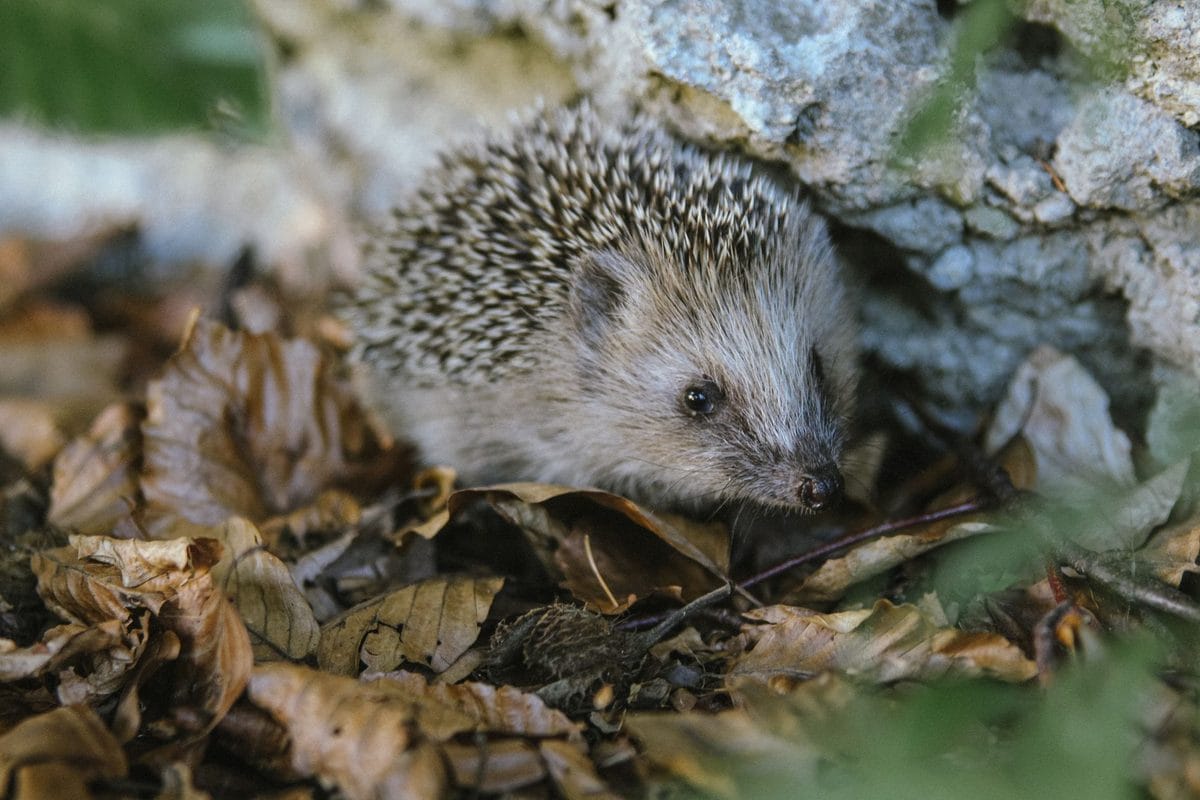
Something low and brown shifts under the pile of leaves you raked off the lawn on Saturday, and it takes a second to see the spines. A hedgehog, then, and not for the first time this autumn. The torch beam makes it freeze into a lump that could pass for a bit of bark. The usual reactions are to fetch a box and a towel, or to back away and feel uneasy about it. Neither is quite right, and the reasons behind that are more useful than the instinct.
Hedgehogs are in serious trouble across Britain. The Royal Horticultural Society puts the remaining population at fewer than 900,000, down from an estimated 30 million in the 1950s, with nearly half of the UK population lost in just 13 years. A garden cannot reverse that on its own. What it can do is quite ordinary: leave a pile alone, check before cutting, make a gap in the fence and put out water. October is the month when those ordinary jobs matter most.
Why October is the busy month for hedgehogs
Hedgehogs look for a quiet place to hibernate from October or November through to March or April, according to the RHS. Before that they have to eat hard. A hedgehog forages through the night and can roam up to two kilometres in a single night in search of food, shelter and mates. That distance is why a tidy lawn behind a solid fence is not much use to them on its own.
The RHS describes a pile of logs and leaves as a larder of grubs and beetles, which is why a log pile or a heap of leaves in a quiet corner does more for a hedgehog than a tin of food ever will. Anything that breaks the animal's routine costs it energy it does not have to spare, and this is the stretch of the year when it can least afford to lose any.
The bonfire pile is the most dangerous thing in the garden
The RHS describes a bonfire pile as a five-star hotel to a hibernating hedgehog, and the description is accurate. The animal settles into the warm centre at the base of the pile, which is exactly where a fire does the most damage.
Smoke is the real problem, more than the flame. It disorientates a sleepy hedgehog and hides the way out. A hedgehog's reaction to danger is to curl into a ball rather than run, which is the worst possible response when the threat is coming up through the sticks. Smoke also covers the escape route for every other small animal in the pile.
If you do have to burn, the sequence is fixed. Build the pile just before you light it, or take an existing pile apart, move it and rebuild it on the day, checking every layer as you go. Then light it from one corner only, so that anything still inside has a way out. The same check applies to any Bonfire Night display in your area, so it is worth asking the organisers what they do before 5 November.
Honestly, the better option is not to build a bonfire at all. Make a habitat pile in the same corner instead, from logs, twigs, leaves and old stems. The RHS recommends habitat piles and dead hedges for exactly this reason: they are good habitat, and the hedgehog can stay where it is. Dead hedges made from cut stems do the same job and take the garden waste that would otherwise end up on the fire.
Check before the strimmer and the fork
Strimmers are among the biggest causes of fatal and severe injuries to hedgehogs, according to the RHS, and the danger is easy to overlook. The animal is small, the grass is long, and nothing about it looks like a hazard until the blade hits. Walk the area first, lift the long grass with a rake or your hand, and only then cut. If you keep a robotic mower, ask the manufacturer what hedgehog safety precautions it has, because they vary from one model to the next.
The compost heap needs the same care. Hedgehogs use heaps for shelter, so a fork pushed into the middle can injure one that is curled up at the bottom. Work slowly, look before each forkful, and avoid digging the whole heap out in one go. Leaves that you rake up are not rubbish either, and a loose pile of them in a corner gives a hedgehog a place to sleep.
- Walk the area before cutting long grass or using a strimmer.
- Look into the compost heap before forking it.
- Remove loose plastic netting and old compost bags, which can trap wildlife.
- Take any old metaldehyde slug pellets to the recycling centre, since the RHS notes they are now banned because of their toxicity to wildlife.
A gap in the fence and water in a bowl
Hedgehog Street and the Wildlife Trusts both give the same measurement for a hedgehog highway: a hole of 13 cm by 13 cm cut at the base of a fence panel or wall. The RHS describes it as roughly CD-sized. A wooden panel can be cut with a coping saw, but check first that the panel is not structural. If you share the fence with a neighbour, agree it with them before you cut, because a gap makes sense only when the next garden has one too.
Water is the other easy win. A shallow bowl of clean water left out all year, and topped up in hot weather, helps hedgehogs as much as it helps birds. If you have a pond, fit a ramp into any steep side, because a hedgehog that falls in can tire without a way out. Cover open drains for the same reason.
Feeding is worth doing in early autumn, when the animals need to fatten up before winter. The RHS suggests tinned meaty dog or cat food. If cats or foxes take it, put the food inside an upturned box with an entrance hole cut in one side. Food is a supplement, though. A garden with leaf litter and log piles will feed a hedgehog far better than any tin.
When to step in, and when to leave the animal alone
This is where the common advice goes wrong, so it is worth reading the guidance the rescue bodies agreed on. The British Hedgehog Preservation Society, the RSPCA, the British Veterinary Zoological Society and three rehabilitation organisations published a joint view on hibernation weights, and it is more relaxed than many people expect. Young hedgehogs that are otherwise healthy and weigh over 450 g can survive hibernation, and the guidance says rescuing them on weight alone is unnecessary and stressful for the animal.
Weight is not the trigger, and that is the main point to remember. A hedgehog that is out during the day, or looks ill or injured, should be taken into care whatever it weighs. The guidance also makes exceptions: a female building a nest during breeding season, or a healthy adult that has been disturbed while you were working in the garden, may be out in daylight for a short time without needing help. If you are unsure, call the BHPS on 01584 890 801 and describe what you see.
The weight rule is for wild animals. Hedgehogs that have already been taken into care follow different guidance, because they put on weight quickly in captivity and shed it on release. Once an animal is in a box, the rules change, so the first decision is whether it should have been brought in at all.
A house, a camera and a record of who visits
A hedgehog house is worth having if the garden has the space. The RHS suggests a sheltered spot, such as behind the shed, with a tunnel entrance or internal baffle to keep predators out. Face the entrance south or east, and cover the roof with leaves or logs so it blends into the garden. Once it is in place, leave it alone.
You will not know whether hedgehogs are using the garden unless you look for the signs. Droppings are black, shiny and about an inch long, and they are usually found singly rather than in a heap. A night-time camera tells you more than any amount of standing in the dark with a torch. Log any sighting on the Big Hedgehog Map, which the RHS links from its page, because local records feed the population work that follows.
Under that heap of leaves, the animal is probably doing exactly what it should. Let it finish, step back, and put the rake away for the evening. The pile you were going to burn on Saturday may have a hedgehog asleep at its centre, so check it before you strike a match.