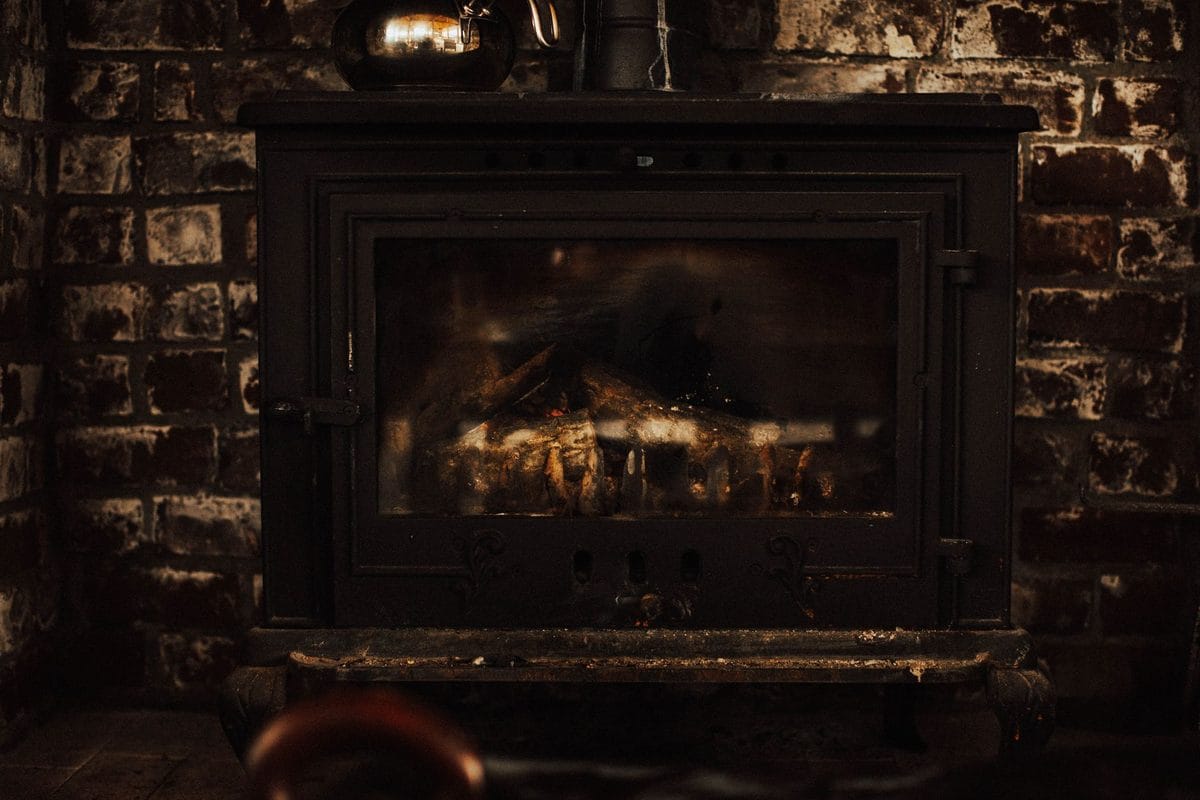
The first properly cold evening has a habit of turning up before the house is ready for it. The log basket is full, the stove hasn't held a fire since April, and the obvious move is to open the door, drop in a firelighter and get on with the evening. That is when a flue that has sat cold all summer shows you what it has been up to: a jackdaw's nest in the pot, a crust of old tar on the walls, a door seal that no longer grips, or a carbon monoxide alarm whose battery died in May. Every one of those is straightforward to deal with in the first week of October and a frustrating wait by the middle of November.
Book the sweep this week, not on the first cold night
HETAS, the body that registers solid fuel installers and approves chimney sweeps, advises sweeping at least twice a year when you burn wood and at least once a year when you burn smokeless fuel. The best moments are just before the heating season and after a long spell of disuse, which describes early October rather well. The snag is demand, because HETAS says September to November is the busiest period for sweeps and that by November you may be waiting several weeks for a slot. Spring is the quiet time to book, but if that window has gone, start ringing round now. Choose a HETAS Approved sweep, ask to see their identity card, and pass on the cheapest handyman in the area, because the certificate that comes with the job is what an insurer or a buyer's solicitor will eventually ask to see.
A standard visit is modest money. HETAS puts the 2026 UK average at about £72, with most sweeps charging £60–£85, from an average of £82 in London down to £60 in the East Midlands. For that you should get the whole flue swept, dust sheets and vacuuming, a visual check of the flue and pot, a smoke test and the certificate, usually in half an hour to an hour. A quote below roughly £40 deserves suspicion, since HETAS notes that bargain sweeps tend to skimp on time, the visual check and the paperwork. The state of the chimney is what pushes a bill up, and these are the typical additions HETAS lists for 2026:
| Extra work | Typical addition |
|---|---|
| Bird's nest or other blockage | £100–£200 |
| Heavy soot or creosote needing power sweeping | £50–£100 |
| Open fire or inglenook rather than a lined stove flue | £35–£50 |
| Awkward access, such as a tall or restricted stack | £30–£100 |
| CCTV inspection of the liner | £50–£100 |
Two of those you can influence. Hard tar builds up when you burn wet wood, so a moisture meter (around £20, according to HETAS) is cheaper than a power sweep. Nests are a matter of luck, but removing one that is still in use is illegal, so a sweep has to establish whether anyone is home before touching it.
Twice a year is the HETAS line for regular burning. If the stove only comes out on a handful of weekends, one sweep before the season is the realistic floor, and the sweep's own look at the soot will tell you whether a spring visit is worth paying for. The sweep after a long gap, though, is not optional.
Just moved in and no idea when it was last done?
Sweep before the first fire, whatever the seller told you, and ask for the Certificate of Compliance, which any solid fuel appliance fitted since April 2005 should have. Your solicitor normally holds it from the conveyancing, and HETAS sells replacement copies for £36. A CCTV inspection (£50–£100 on top of the sweep) is the right extra here, because it shows the condition of the liner, and that is the one part of a flue you can't judge from the hearth.
A ten-minute stove check before anyone strikes a match
Do this after the sweep has been, because sweeps often lift parts out to reach the flue. Check the following, among other things:
- Door seal. Close the door on a strip of paper and tug it. If the paper slides out without any resistance, the rope seal has flattened and the stove will draw air where it shouldn't, so replace it with rope of the diameter your manual specifies.
- Baffle plate. Make sure the loose plate above the fire sits flat and fully back in position.
- Glass. A cracked pane means no fire until it is replaced.
- Firebricks or vermiculite lining. Hairline cracks are cosmetic, but a missing chunk or bare steel at the back is a reason to stop and replace the lining.
- Air vent. If your installer fitted a permanent vent for the stove, it has to stay open, and stuffing it with a rag against a draught defeats its purpose.
Then step into the garden with binoculars and look at the chimney itself: the pot or cowl, a leaning stack, crumbled pointing, lifted flashing. Stay off the roof, and mention anything you spot to the sweep before they climb up.
The carbon monoxide alarm is the cheapest safety kit in the house
If you don't have one in the room with the stove, buy one this week, and if yours is past the date printed on it, replace it. In England, Approved Document J says a new or replacement solid fuel appliance must be fitted with a carbon monoxide alarm in the same room, complying with BS EN 50291-1:2018 and powered by a battery designed to last the life of the alarm. Older installations may predate that rule, which is no reason to go without, and the NHS advises one alarm in every room that contains a gas, oil, coal or wood appliance. Position matters too. Part J puts the alarm between 1m and 3m horizontally from the stove, either on the ceiling at least 300mm from any wall or high on a wall above doors and windows but not within 150mm of the ceiling, so the hallway is the wrong place. A sealed 10-year Kidde model with a display costs roughly £25–£29 at Screwfix at the time of writing. Press the test button monthly (HETAS calls it Test it Tuesday) and treat the expiry date as final.
Carbon monoxide has no colour and no smell, so the first sign is usually how you feel. The NHS lists headache, dizziness, feeling sick, weakness, tiredness and confusion, and notes that the symptoms can come and go and tend to ease when you leave the affected room or go outside. If the alarm sounds, HETAS's advice is to turn the appliance off, open doors and windows, get everyone out of the house, and keep the stove out of use until it has been serviced and the chimney swept. Call NHS 111 if you suspect symptoms, and 999 if you are struggling to breathe or suddenly confused.
Tenants take note: since 1 October 2022, landlords in England have had to provide a carbon monoxide alarm in any room used as living accommodation that contains a fixed combustion appliance (gas cookers excepted), which includes a wood burner. If your rented flat has a stove and no alarm, ask for one in writing.
Lighting the first fire properly
Start with the fuel. Wood sold in England in volumes of up to 2m³ has had to be Ready to Burn certified, at a moisture content of 20% or less, since May 2021, and a moisture meter tells you whether the load you bought in August has genuinely dried. Split a log and test the fresh face, not the weathered bark. Wet wood blackens the glass, tars the flue and wastes heat boiling off water before any of it reaches the room.
HETAS describes two ways of lighting a stove, and for a flue that has been cold for months the top-down method is the better choice. Lay two small logs across the fire bed, five pieces of kindling across them, four more at right angles with two firelighters in the gaps, and another five on top. Set the controls to the lighting position, light the firelighters and shut the door. The fire burns down through the stack and warms the flue gradually, so you never open the door and chill the firebox. Leave the kindling alone until the top of the stove is warm, then set the air control as your manual directs, and where the manual says something different from any of this, the manual wins.
What stays out of the fire matters as much as what goes in. In a HETAS survey of more than 2,300 log burner users, almost one in six admitted burning something they shouldn't, from cardboard and old pallets to household rubbish. Smouldering is the other trap: HETAS notes that a hot, well-ventilated fire produces far less soot than a smouldering one, so turning the air right down to stretch a load of logs is a false economy. Know the warning signs of a chimney fire too: loud crackling or popping, thick smoke, a strong burning smell, or a roaring in the chimney. Sticky, tar-like material dripping into the fire means stop burning and call a sweep. If you think a chimney fire is under way, get everyone out and ring 999, closing the stove's door and air vents only if that is safe. HETAS counted 2,540 chimney fires in England between April 2022 and March 2023, and says most trace back to either what was burned or how long it had been since the last sweep.
Smoke control areas: the one rule that catches people out
Many parts of the UK are smoke control areas, and your local council can tell you whether yours is one. Inside one, you can't release smoke from a chimney, and you can burn wood only in a Defra-approved (exempt) appliance, using the fuel the manufacturer specifies. In England the penalty for smoke from your chimney can be up to £300, and buying unauthorised fuel for an appliance that isn't exempt can bring a fine of up to £1,000, according to GOV.UK. There is no ban on burning wood in England, but the government has been consulting on tighter domestic burning measures, so check the GOV.UK smoke control page rather than relying on last winter's understanding of the rules.
When the sweep has been and gone, put the certificate in the same folder as the boiler service record, along with the stove's Certificate of Compliance if it was fitted after April 2005. You will want all of it to hand the day an insurer or a buyer's solicitor asks what has been burning in that fireplace.