By the last week of July, the lawn outside most British semis has already given up. It has gone from green to a patchy, straw-coloured mat, and the hydrangeas two doors down are dropping buds before they've even opened. If you're in an area served by South East Water, Yorkshire Water or Thames Water, you've probably had a text or a letter warning that a hosepipe ban is coming, if one isn't in force already — all three have introduced restrictions this year, in what's shaping up to be one of the driest stretches in decades. None of this is unusual for an English August; reservoir levels dip most summers now, and water companies have reached for these bans more often over the last five years than in the previous twenty combined. What tends to happen next is panic: someone drags the can round every bed twice a day for a week before the restrictions land, exhausts themselves, and still loses the plants that mattered.
A better approach costs less over a season and barely notices when the ban actually arrives. It means setting up a garden that catches and reuses water it would otherwise lose down the drain — a water butt sized properly for your roof, a drip line instead of a sprinkler, and a clear-eyed decision about which parts of the garden are worth fighting for in a dry spell. None of it needs a tradesperson or a weekend spent digging trenches. Most of the kit below bolts together in an afternoon, and the priciest single item on the list still costs less than a mid-range hosepipe reel from the same shop.
What a Hosepipe Ban Actually Stops You Doing
A Temporary Use Ban — the legal name water companies use, even though everyone calls it a hosepipe ban — restricts anything connected to the mains supply through a hose: watering the garden, washing the car, filling a paddling pool, topping up a pond. Breaching one is a genuine offence under Section 76 of the Water Industry Act 1991, punishable by a fine of up to £1,000 (level 3 on the standard scale), though in practice most water companies rely on neighbour reports and a stiff warning letter rather than court action — Yorkshire Water has said publicly it has never actually issued one. The exemptions catch people out because they don't feel like exemptions at all:
- Hand-watering with a can, at any time of day and in any quantity
- Watering from a water butt, however the butt itself was filled
- A drip or soaker system running entirely off stored rainwater rather than the mains
- Filling a bucket from an outside tap and carrying it to the border, since a bucket is not a hosepipe, even though it feels like cheating
That distinction is really the whole point of everything that follows. The ban targets the delivery method, not the act of watering itself, so every trick below is a way of watering that a ban simply cannot touch.
Water Butts and Rainwater Harvesting: The Real Fix
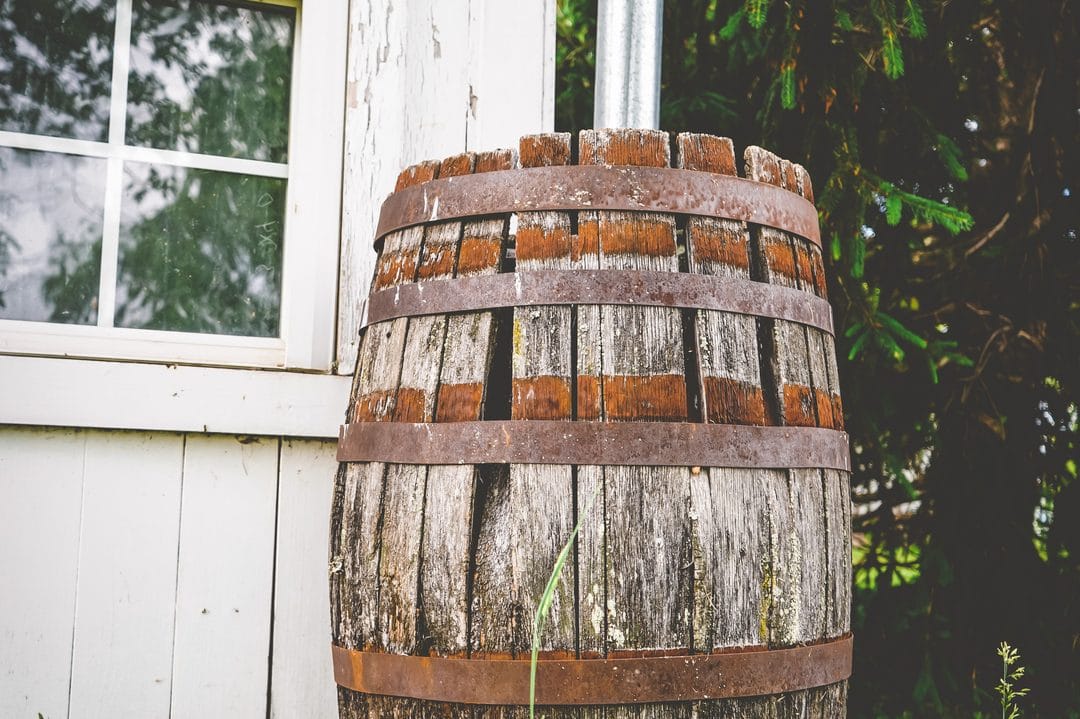
A roof of around 45m², under a typical south-east England rainfall of roughly 600mm a year, sheds something like 27,000 litres annually — do the sum yourself (45 × 0.6) and the number holds up — and almost all of it currently runs straight into the drain. Fitting a rainwater diverter kit redirects that flow into a butt instead, and Screwfix and Wickes both stock FloPlast diverters for roughly £10–£25 depending on downpipe shape and colour. The butt itself is the only real spending decision left to make: B&Q's basic 100-litre slimline butt with stand, tap and filler kit runs about £33, a 210-litre butt with the same accessories sits around £38–£62 depending on the finish, and linking two together with a connector kit multiplies your storage without doubling the footprint against the wall. Buy the largest butt you have room for — a single 100-litre butt fills during one heavy shower and empties within two or three days of hand-watering a modest border, so extra capacity is what gets a garden through a dry fortnight rather than a dry weekend. That said, a butt is only as useful as the rain that fills it, and during the driest stretches of an actual drought — precisely when a ban is most likely to bite — a roof simply doesn't shed enough to keep one topped up, which is why the drip and grey-water strategies further down matter just as much as the butt itself. Position it near the bed that needs the most water rather than near the nearest downpipe out of sheer convenience, because carrying a full can thirty metres twice a day gets old fast. A stand matters more than most people expect — a couple of paving slabs on compacted hardcore works just as well as a bought one — since gravity feed from ground level barely dribbles out of the tap.
Drip Irrigation Beats a Sprinkler on Every Measure That Matters
Skip the sprinkler.
Left running for an hour, a garden sprinkler can get through roughly as much water as a family of four uses in a whole day — a comparison most UK water companies quote directly in their drought campaigns — and a fair share of what lands ends up on the path, the fence or drifting off as mist before it ever reaches soil level. A soaker hose or drip line, laid directly on the ground under a layer of mulch, delivers water at the roots where a plant can actually use it, which cuts total consumption noticeably for the same bed and the same result. Hozelock's Easy Drip Universal Watering Kit, which covers beds up to 10m², costs £65.99 at Screwfix and £70.83 at B&Q, and pairs with a Hozelock single-outlet watering controller (£45.99 at Screwfix) if the idea of setting an alarm for 6am doesn't appeal. Run it from a water butt rather than the tap and the whole system sidesteps the mains-hosepipe restriction entirely, since nothing in it ever touches the supply the ban actually covers. It won't deliver the volume a mains-fed system would, so it suits raised beds and containers better than an entire lawn — but for the vegetable patch and the pots by the back door, that's the difference between a harvest and a write-off.
Reusing Grey Water Without Making Yourself Ill
Bath water, washing-up water and the rinse cycle from the washing machine all count as grey water, and none of it falls under hosepipe restrictions because it never touches the mains supply once it's sitting in a bucket. Ornamental borders, established shrubs and the lawn can all take grey water without much fuss, provided it's free of bleach, strong disinfectant or a heavy dose of fabric softener — plain soap and washing-up liquid residue is fine at the dilution a garden gets it at. Edible crops are a different matter, though. The Royal Horticultural Society's standard advice is to keep grey water off anything eaten raw, particularly leafy salad and root vegetables, because of the bacterial load ordinary household water carries even when nothing about it looks wrong. So the tomatoes and the runner beans stay on stored rainwater or tap water, while the roses and the privet hedge can happily take whatever comes out of the bath that evening.
Mulch, Timing and the Plants That Don't Need Saving
None of the kit above matters much if the watering itself happens at 2pm in full sun, when a large share of what lands on the soil evaporates before a root ever sees it. Water your beds early morning or after 7pm instead, and you'll need noticeably less to get the same result — gardening advice has said this for decades, and it remains the cheapest change available, since it costs nothing and needs no equipment at all. A 100-litre bag of Wickes bark chippings costs £12.50 on its own, or closer to £10 a bag under the current three-for-£30 offer, and a 5cm layer spread over borders after watering cuts evaporation from the soil surface sharply, which means the water that was applied — whether from a can, a butt or the drip line — stays where the roots can reach it instead of baking off within a day.
Then there's the harder decision, the one most guides skip because it isn't something you can buy. An established shrub or a mature hedge has roots deep enough to survive most droughts on its own once it's had two or three seasons in the ground, and watering it weekly does more for the gardener's conscience than for the plant. By contrast, a lawn is shallow-rooted, thirsty and largely cosmetic, which is exactly why most councils and water companies barely register a brown lawn while caring a great deal about a hosepipe running for two hours a day. Let the lawn go dormant. It browns off in a dry August and greens back up within a couple of weeks of the first proper autumn rain, almost without exception, and no amount of watering through a ban is going to change that timeline anyway. Spend the stored water instead on the vegetable beds, the containers and anything planted this year that hasn't had time to root deep — that's where a drought does lasting damage, not on the grass.
None of this needs to happen in a single weekend. Fit the diverter and one water butt first, since everything else depends on having stored water to work with, then add the drip kit to whichever bed is struggling most once there's a sense of how far the stored water actually stretches. By the time the ban notice lands — and in most of southern and eastern England, at some point most summers, it does — the garden will barely notice it arrived.