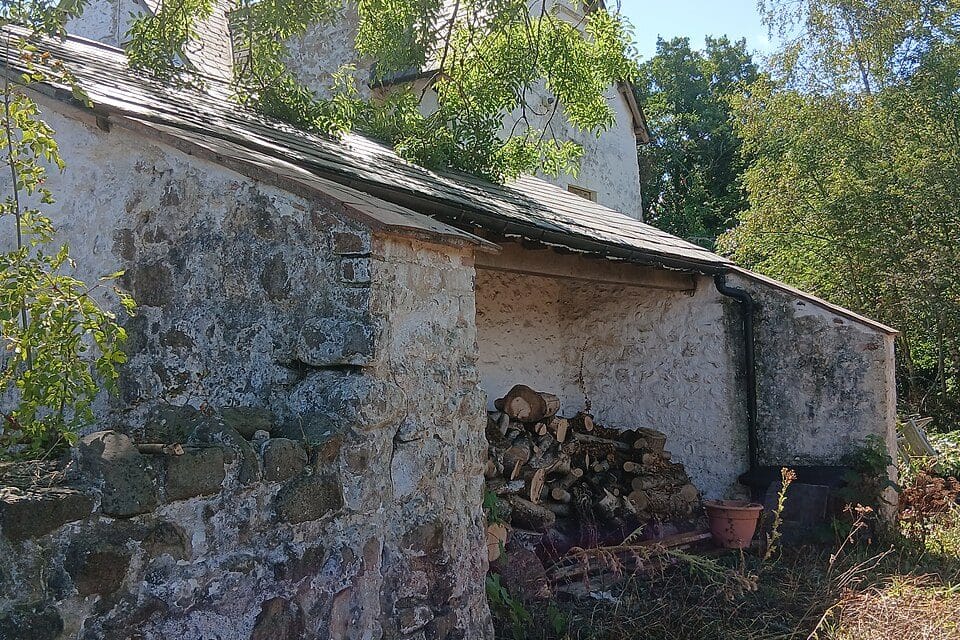
Firewood merchants in the West Country and the Pennines both tell the same story every October: the phone starts ringing the week the clocks go back, and by then the good seasoned stuff is gone. What's left is often wood cut in July and sold to you as "ready to burn" three weeks later, which it isn't. The fix isn't complicated, but it does mean doing something in late August that feels premature — building or buying a log store now, while the garden centres still have kit in stock and the merchants haven't put their prices up for the season.
Why late August is the window, not October
A cubic metre of kiln-dried ash bought in September from a local supplier typically runs £75–£95 delivered in the South East; by December, once demand spikes and delivery slots fill up, the same load can be £110–£140, and next-day delivery often isn't available at all. Buying green or part-seasoned hardwood in bulk now — usually £45–£65 a cubic metre — and giving it eight to twelve weeks under cover before the cold really bites gets you most of the way to a workable moisture content for far less money. Ash is the obliging one here, since it burns reasonably even at higher moisture than most species and seasons faster than oak, which can sit for two full years and still not be worth putting near a flue. Birch dries almost as quickly but burns hot and fast, so it suits a top-up log more than a main fuel unless you're feeding the stove often. None of that works, though, without somewhere dry and ventilated to put it. A tarp over a woodpile against the fence looks like a solution and isn't one: it traps moisture against the logs on the ground side, encourages rot and woodlice, and does nothing for airflow, which is the actual thing that dries wood.
What a log store is actually doing
A proper store does two jobs at once — it keeps rain off the top and lets air move freely through the sides and base. Get either one wrong and you've built an expensive damp cupboard. This is where a lot of DIY builds go wrong: people focus on keeping the wood dry and end up sealing it in, boarding all four sides because it looks tidier, and then wonder why logs stacked in June are still hissing on the fire in November.
Sizing it for what you'll actually burn
A wood-burning stove used two or three evenings a week through a UK winter gets through roughly 2–3 cubic metres of seasoned logs in a season — more if it's your main heat source, less if it's purely decorative on cold snaps. Work backwards from that: a store holding 1 cubic metre gives you barely six weeks of fuel and means constant top-ups from a merchant at whatever the going rate is that week. Build for 1.5–2 cubic metres if you can spare the space, because that's roughly the difference between buying once in September at the low price and buying three times through the winter at whatever's left on the yard.
- Small stove, occasional use: 1–1.5m³ store (roughly 1.2m wide × 0.6m deep × 1.8m tall)
- Main heating source, regular burning: 2–3m³ — think two stores side by side, or one at 1.8m wide
- Chiminea or occasional outdoor fire pit only: a half-size store is genuinely enough, and building bigger just wastes timber and space
Pallet timber, treated softwood, or a kit — pick one and mean it
Pallets are free if you can get hold of good ones (ask at a builders' merchant or a local warehouse — most will happily get rid of the heat-treated ones stamped "HT"), and they make a perfectly serviceable base and sides. The catch is that pallet timber wasn't built for outdoor weathering, and a store made entirely from reclaimed pallets tends to need rebuilding within three or four years as the slats split and the nails work loose. Treated softwood from a merchant — tanalised 22×95mm featheredge or similar from Jewson or Travis Perkins — costs more upfront, roughly £120–£180 in materials for a 1.5m³ store including roofing felt and fixings, but it's rated for at least 15 years outdoors and doesn't need annual patching.
Then there's the third option, which is simply buying one ready-made. Rowlinson and Forest Garden kits are widely stocked at B&Q and Wickes, running from around £90 for a compact 0.5m³ unit up to £250–£350 for anything holding 1.5m³ or more with a slatted design and a felted pent roof. For anyone without a Saturday to spend cutting timber, that price gap between materials and a finished kit is often narrower than it looks once you account for your own time — and a bought kit arrives already correctly spaced for airflow, which is more than can be said for some first-time DIY builds.
Siting: airflow beats sunshine
A south-facing wall sounds ideal and often isn't — full sun on a sealed roof can bake the top layer of logs while the middle of the stack stays damp, and it does nothing for the wind-driven airflow that actually shifts moisture out of the wood. What matters more is a spot with a through-breeze: against a fence with gaps, at the side return of the house, or anywhere air can move under and through the stack rather than just over the top of it. Leave at least 5–10cm of clearance between the back of the store and any wall — pushing it flush against brickwork blocks airflow on that side and traps damp against both the timber and the wall itself, which is not a combination your pointing will thank you for.
Base and roof: the two details people skip
Logs stacked straight onto grass or bare soil will wick moisture up from the ground regardless of how good the roof is — this is the single most common reason a "seasoned" delivery goes soft again after a wet spell. Raise the base at least 10–15cm off the ground on breeze blocks, a pallet, or a simple frame of tanalised bearers, with a gap underneath for air to circulate. A layer of gravel or hardcore beneath that stops splashback from rain bouncing off the ground onto the bottom row.
For the roof, a simple mono-pitch (pent) design with a 5–10cm overhang at the front sheds rain clear of the stack without needing anything elaborate. Green or black mineral felt from B&Q or Wickes, around £15–£25 for enough to cover a 1.5m store, does the job and lasts a decade if you dress the edges properly. Corrugated bitumen sheet is the upgrade — lighter, no torching required, and it copes better with the kind of driving rain that comes in sideways off the Atlantic in a February storm. Whichever you choose, the sides should stay open slats or a wire mesh, never solid boarding, or you've built the sealed box that undoes everything the raised base and roof were meant to achieve.
Stacking, moisture content, and knowing when it's actually ready
Stack with the bark facing up on split logs — it sheds water and slows the surface drying that can case-harden the outside while the core stays wet. Leave real gaps between rows rather than cramming the store full; a stack you can just about slide a hand into sideways lets air travel through the whole pile, not just skim the front row. Rotate as you go, moving the oldest wood to the front so it gets burned first and the newest additions season undisturbed at the back — a system that only works if you actually load from one end and burn from the other, rather than grabbing whatever's nearest on a cold Tuesday.
The number that actually matters is moisture content, not how the wood looks or how long it's supposedly been sitting there. Under the Ready to Burn scheme, wood sold for domestic burning in England must be at or below 20% moisture content, and it's worth taking that seriously rather than as a label on a bag — Ecodesign stoves are far less forgiving of wet fuel than older open fires were, and burning logs above that threshold produces more smoke, more tar buildup in the flue, and noticeably less heat for the same volume of wood. A cheap moisture meter from Screwfix or Toolstation, around £12–£20, pays for itself the first time it stops you burning a batch that looks dry but reads 28% on a split face. Test on a freshly split log, not the weathered outer surface, because the outside will always read drier than the core. Keep the meter in the shed rather than the house, because it's the sort of small tool that gets buried in a kitchen drawer and forgotten by the time you actually need it again in November. Check a few logs from different parts of the stack too — the ones nearest the airflow at the front will always read lower than anything buried in the middle.
Safety and everyday access
Leave enough clearance in front of the store for a wheelbarrow to turn, not just squeeze past — you'll be filling a basket or barrow from it in the dark and in the rain more often than not, and a store you have to unload sideways gets used badly. Keep it at least a metre from any door or window that opens outward, and don't stack logs directly against a shed or fence panel treated with anything flammable without checking compatibility first. If the store sits near a boundary, a quick look at your deeds or a chat with the neighbour saves an awkward conversation later — nobody minds a log store until it's suddenly on their side of a fence they didn't agree to.
None of this needs to be complicated, and it doesn't need doing in a single weekend either. Build the frame this week, felt the roof before the next wet spell, and get logs stacked and off the ground before the merchants' prices move. The wood you buy cheap in September and the wood you're desperate for in December are often literally the same pile — the only difference is whether it had somewhere dry to sit in between.