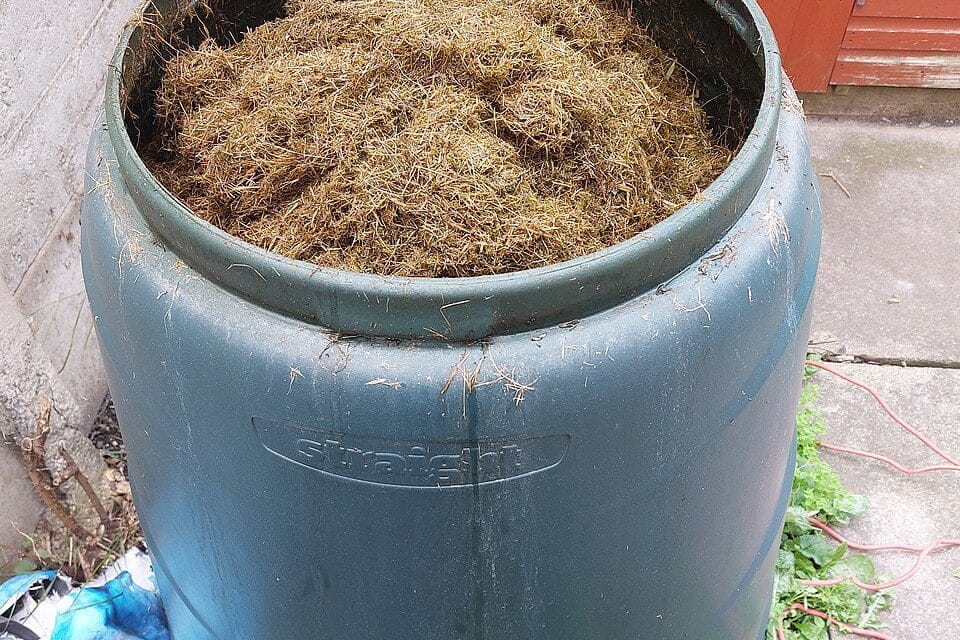
The compost heap at the back of most British gardens has spent the summer being ignored, and it shows. Six weeks of dry weather have either baked it into a solid, straw-coloured brick or left it slumped and sour where a bucket of kitchen peelings went in without anything dry to balance it. Either way, late August is the last comfortable window to sort it out before the real volume arrives — because within a month, every deciduous tree from Cheshire to Kent starts dropping leaves in earnest, and a neglected bin cannot cope with that kind of input on top of whatever mess is already sitting in it.
This matters more than it sounds like it should. Get the heap right now, and by next spring you have friable, dark compost worth digging into borders and vegetable beds. Get it wrong, and you spend October cramming wet leaves on top of a stalled, anaerobic mass that does nothing useful until well into next summer — if it ever recovers at all.
What a summer-neglected heap actually looks like
Open the lid and you'll find one of two problems, rarely a happy medium. The first is a heap that's gone completely dry and stopped rotting — the material inside looks almost identical to what went in months ago, just greyer, because bacteria need moisture to work and there hasn't been enough rain to give them any. The second is the opposite: a slimy, grey-brown sludge at the bottom that smells distinctly of ammonia or, worse, rotten eggs. That smell means it's gone anaerobic, usually because too much wet green material (grass clippings, courgette leaves, kitchen scraps) went in without enough dry brown material to balance it, and the whole thing has compacted into an airless mass.
Neither is a lost cause. For the dry heap, fork it over and soak it — a full watering can poured slowly over a turned pile, repeated until it feels like a wrung-out sponge, is usually enough to restart activity within a fortnight. For the slimy one, the fix is less pleasant but more urgent: fork the whole thing out, mix in a good quantity of shredded cardboard, dry leaves left over from last autumn, or straw if you can get it, and rebuild the heap loosely so air can move through it. Skip this step and every leaf you add in October just joins the same stagnant pile.
The carbon-to-nitrogen ratio nobody explains properly
Compost needs roughly 25–30 parts of carbon-rich "brown" material to every 1 part of nitrogen-rich "green" material by volume, not by weight, and this is the single most common thing home composters get backwards. Cardboard, dry leaves, twiggy prunings and shredded paper are browns. Grass clippings, vegetable peelings, coffee grounds and fresh green prunings are greens. Most gardens produce far more greens than browns through spring and summer, which is exactly why so many heaps turn slimy by August — there simply hasn't been enough brown material going in to balance the mower bag.
This is where autumn actually helps you. Leaves are one of the best brown inputs available, and unlike cardboard they arrive for free in more or less unlimited quantity. The smart move — and this is worth doing before the leaf-fall properly starts rather than after — is to save some of this year's leaves specifically as a carbon reserve for next spring and summer, when your green waste will again outpace your brown supply. A dustbin bag or two of dry leaves, stored under cover somewhere, solves next June's slimy-heap problem in advance. Most people never think to do this and pay for it nine months later.
Leaf mould deserves its own bin, not a place in the main heap
Here's the contradiction worth sitting with: leaves are excellent compost material in moderate quantities, but the volume that comes down in October and November from even a couple of mature trees will smother a standard compost bin, mat down, exclude air, and slow the whole system to a crawl. The better move is to keep leaves mostly separate.
Leaf mould is made differently from compost — it breaks down through fungal action rather than bacterial, works far more slowly, and needs almost nothing added to it beyond the leaves themselves and moisture. A simple wire-mesh cage knocked together from four posts and a roll of chicken wire (under £20 in materials from most builders' merchants) is genuinely all you need; leaves piled loosely inside, dampened if the autumn stays dry, and left alone. After one year you get a coarse mulch good for mulching borders. After two years, sieved, you get a fine, peat-free seed-sowing medium that's honestly better than most bagged multi-purpose composts for that specific job. Oak, beech and hornbeam leaves break down fastest; thick, waxy leaves like sycamore and horse chestnut take noticeably longer and are worth shredding first with a rotary mower if you have the volume.
What not to put in this autumn
Diseased material is the obvious one — leaves from roses with black spot, anything touched by box blight, or apple leaves carrying scab should go in the council green bin or be burned, never the home heap, because a standard cold compost system rarely reaches the sustained heat needed to kill off fungal spores. The same goes for perennial weed roots: bindweed, couch grass and ground elder will happily resprout from a compost heap that never gets hot enough, and you'll spend next spring reintroducing the exact weeds you were trying to get rid of.
Windfall apples and pears are trickier than people assume. A few are fine, but a heap swamped with fermenting fruit in September turns acidic fast, and it draws wasps in numbers you will notice. If your tree has dropped more than a barrow-load, better to compost them in a separate pile away from the house, or check whether your council collects fruit waste separately — several boroughs now do.
Turning, moisture, and realistic bin options
A standard plastic "dalek" bin — the black conical type most councils sell subsidised through schemes like Get Composting, typically £15–£25 for a 220-litre bin against a retail price closer to £40 — needs turning roughly every four to six weeks through autumn to keep air moving and speed things along. Skip the turning entirely and you'll still get compost eventually, just slower and lumpier, which is a perfectly reasonable trade-off if you'd rather spend a Saturday doing something else.
For anyone who actually wants finished compost within months rather than a year or more, a hot bin is worth the outlay. The HOTBIN Mini or Original (roughly £200–£280) insulates the compost and can hold internal temperatures above 40°C even through a British winter, which means it will happily take cooked food scraps, small quantities of meat and dairy that a cold bin can't handle, and still produce usable compost in eight to twelve weeks. It's not a cheap purchase and it won't suit a small garden with modest waste volumes — for most households a standard bin plus a leaf mould cage does the job for a fraction of the price, and that's the setup worth recommending to anyone starting from scratch this month.
Moisture is the thing people get wrong most often once the bin is set up correctly. Through a dry September, check weekly and water if a squeezed handful of material doesn't hold together slightly. Once autumn rain properly sets in, the opposite problem appears — an open-topped bin can get too wet, especially if it's positioned somewhere that catches run-off from a shed roof or fence panel. A simple offcut of old carpet or a section of plywood laid loosely over the top through the wettest months keeps the balance right without sealing the heap up completely.
One more thing worth checking before the weather turns
Hedgehogs move into compost heaps to hibernate from October onwards, and a heap that's been sitting untouched and slightly overgrown at the base is exactly the kind of shelter they look for. Before any major fork-over or rebuild from late September on, check gently for a hollow at the base and signs of nesting material before disturbing it — RSPB and Hedgehog Street both recommend leaving an undisturbed corner of at least one heap through winter for exactly this reason, and it costs nothing to do.
Sort the heap out now, while the weather still allows an afternoon of forking and rebuilding without frozen fingers, and the leaf glut that's about to arrive becomes free raw material instead of a problem dumped on top of an already-struggling pile.