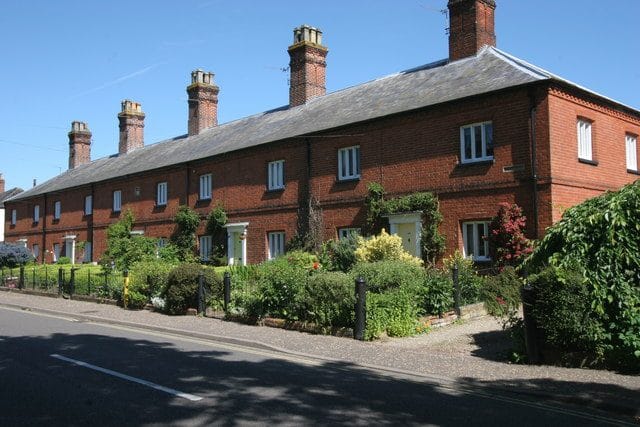
By four in the afternoon on a proper July scorcher, the upstairs of a Victorian terrace in Leeds or a 1930s semi in Reading is often the hottest place in the postcode — hotter than the garden, hotter than the tarmac outside, sometimes hotter than it was at lunchtime. That's not bad luck. It's what happens when a house designed around coal fires and open chimneys gets sealed, glazed and insulated for a British winter that used to matter far more than a British summer. Air conditioning still isn't standard in most UK homes, and running a plug-in unit for a week straight isn't cheap either, so the real question this time of year isn't whether to buy one — it's whether the house itself is working against you before you've even switched anything on. A lot of people assume there's nothing to be done beyond a fan on the landing and gritted teeth until October. There's actually quite a lot you can do, and almost none of it needs a tradesperson.
Some of it is free. Some of it costs a genuinely useful shutter or blind. And one popular fix — a portable air-conditioning unit from Argos or B&Q — turns out to be the least effective option of the lot for most rooms, which we'll get to.
Why Some British Houses Cook Themselves After Dark
Two things make older British housing stock especially bad at shedding summer heat. The first is thermal mass in the wrong place: solid brick and dense plaster soak up heat all day and then release it slowly overnight, which is wonderful in December and miserable in a heatwave, because the walls are still warm at midnight. The second is loft insulation, and this is where it gets a bit awkward — the same 270mm of mineral wool that Building Regs Part L expects for a reasonably efficient loft, and that cuts a typical semi's heating bill by several hundred pounds a year, also stops daytime heat escaping upward once it's built up in the rooms below. Pull it out to solve the summer problem and you'll pay for it every winter afterwards. Nobody sensible recommends that trade.
There's a newer piece of regulation worth knowing about too. Approved Document O, the overheating part of the Building Regulations that came into force for new homes and some major refurbishments in 2022, exists precisely because building control started noticing that well-insulated, well-sealed new-build flats were regularly hitting temperatures that would have been unthinkable in a draughty 1970s bungalow. It doesn't apply retrospectively to your existing house — nobody is coming round to check your loft — but the principle behind it is the one worth borrowing: ventilation has to be designed in, not left to whichever window you happen to remember to open.
Purge Ventilation: The Free Trick Almost Nobody Uses Properly
The most effective cooling measure in this entire article costs nothing, and most people do it backwards.
Purge ventilation means opening the house up when the outside air is cooler than the inside air, and shutting it again the moment that stops being true — which in a heatwave is usually somewhere between 11pm and 7am, not the two hours after work when everyone instinctively flings the windows wide. Throwing doors and windows open at 6pm, while the outside temperature is still higher than the temperature indoors, does the opposite of cooling the house down: it invites more heat in. The better routine is to keep windows and curtains closed and blinds down through the hottest part of the day, accept that the house will feel a bit stuffy by early evening, and then open everything — ideally with a through-draught from a window at the front to one at the back or the top of the stairs — once the outdoor temperature has actually dropped below the indoor one, usually well after sunset.
A cheap box fan placed in an upstairs window facing outward, blowing warm air out rather than blowing air around, will pull a genuine cross-breeze through a two-up two-down in twenty minutes flat, and it costs around £15 from Wickes or Toolstation rather than the £250-plus of a portable air-conditioning unit. Do this consistently for the two or three worst nights of a heatwave and most houses lose their afternoon heat load by breakfast. Skip it for one night — say you're away, or you simply forget — and the house starts the next day two or three degrees warmer than it needs to, then compounds through the following afternoon.
Shutters, Awnings and What Permitted Development Actually Allows
External shading beats internal blinds every time, because it stops heat reaching the glass in the first place rather than trying to block it once it's already inside a warm room — by the time light has come through a window and hit a curtain, most of its heat energy is already in the house. External louvred shutters, roller shutters or a retractable fabric awning over south- or west-facing windows can cut solar gain into a room by well over half, and for a bay window that bakes all afternoon, that's the single best upgrade for anyone serious about this problem.
Whether you need planning permission depends more on where you live than on what you're fitting. Under permitted development rights, most houses (not flats, and not maisonettes) can add external shutters, blinds or awnings to the rear or side of the property without applying for permission, provided they don't project more than a metre or so from the wall and the property isn't listed. Fitting anything to a front elevation facing a highway is where it gets stricter, and it gets stricter again inside a conservation area, or wherever the council has issued an Article 4 direction removing the usual permitted development rights — large parts of central Bath, York and Edinburgh's New Town work this way, among others. If your street has uniform sash windows and Georgian proportions, ring the council's planning duty officer before you order anything; a five-minute phone call is cheaper than taking down a shutter you've already paid to have fitted.
Indoors: Blinds, Fans and Skipping the Portable Air-Con Unit
Where external shading isn't possible — rented flats especially, where you can't touch the outside of the building at all — the next best thing is a blackout or reflective blind fitted close to the glass, not a curtain hung well back from the window. Thermal blackout blinds start around £25 to £40 a window from Argos or Dunelm, and the reflective foil-backed versions often used in south-facing conservatories do a genuinely useful job of bouncing radiant heat back out rather than absorbing it into the fabric.
- Close blinds and curtains on the sunny side of the house by mid-morning, before the room has had a chance to heat up
- Keep internal doors open once the sun has moved off a room, so warm air can equalise rather than pooling in one spot
- A cool, damp towel over the pillow, refreshed once, still beats most gadgets for actually getting to sleep
- Run extractor fans in the kitchen and bathroom for a few extra minutes after cooking or showering — moisture holds heat
Fans move air, they don't cool it, but moving air across skin genuinely does lower how hot a room feels by a few degrees, which is most of what anyone actually wants at one in the morning. A portable air-conditioning unit does more than that — it can drop the actual air temperature — but at a real running cost: a typical single-hose portable unit draws around 1 to 1.5 kW, so eight hours overnight works out at 8 to 12 kWh, somewhere around £2.50 to £4 a night at current UK electricity prices, every single night of a heatwave. For most bedrooms, that buys a marginal improvement over a £15 fan and a properly shut blind, and single-hose units are notoriously inefficient anyway — they pull replacement air in through every gap in the room, including the gap around the exhaust hose itself, undoing a chunk of their own work. Skip it. Spend the money on shutters instead, or on a decent fan and a blind that actually fits the window, and put whatever's left towards the loft insulation top-up you've been putting off.
None of this fixes the underlying problem, which is that most British housing stock was built for a climate that's already gone. But a shut blind at nine in the morning, an open window at eleven at night, and a shutter over the worst-facing window will get a Victorian terrace or a 1930s semi through a heatwave in noticeably better shape than the house next door that's doing none of it.