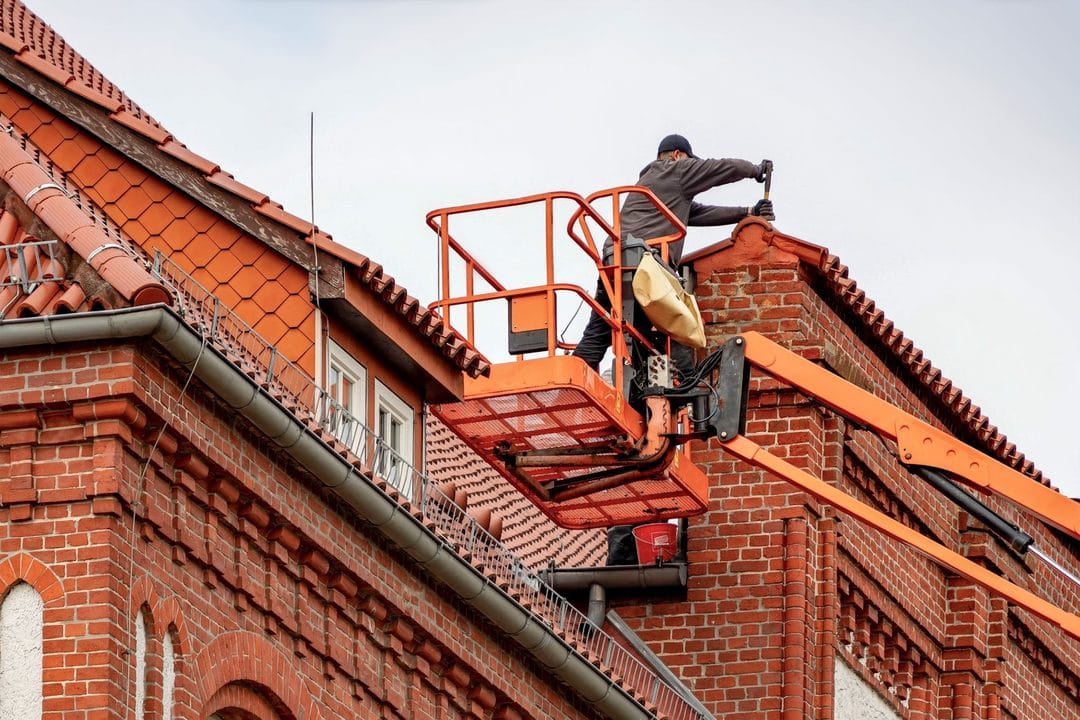
The first storm of autumn tends to leave the same evidence in the same places: a slate lying in the gutter, a dark patch on the bedroom ceiling, a neighbour mentioning a bit of roof on the pavement. A single cracked or slipped slate looks trivial from the garden. Left alone, it lets rain under the felt, and one wet winter later you are paying for replastering as well as a roofer.
Why a slipped slate turns into a leak
A slate roof works because each slate overlaps the one below and sheds water down the surface. When one slips, the gap is not dramatic, but wind-driven rain can get under the batten line and reach the underlay. Older roofs often have felt that has gone brittle, so water does not run off it cleanly. It sits and tracks along the rafter until it finds a route into the loft. The leak often shows up days after the storm, which is why people blame the wrong slate.
Find the source before you touch anything. Go into the loft with a torch on a dry day and look for daylight coming through the roof, damp on the underside of the felt, or staining on the timber directly below the suspect area. Water rarely enters where the slate is broken. It runs along the felt and drips off a rafter several feet away, so the stain on the ceiling is a poor guide to the slate.
What you can safely do yourself
Replacing a single slate on a low, simple pitch is a practical DIY job if you are comfortable on a ladder, have a secure access point, and can work without standing on the slates themselves. Pull the nails of the broken slate using a slate ripper, slide in a replacement of the same thickness, and nail it at the top. Use copper or stainless nails rather than cheap galvanised ones, which rust through within a decade or two in damp conditions.
Matching is the hard part, not the fitting. Slate varies in colour, thickness and surface, and an aged roof has been weathered unevenly for decades. If the broken slate is from a line of old Welsh slate, a new Spanish slate will stand out for years. Reclaimed slates from a salvage yard usually match better. A builders' merchant such as Travis Perkins can order new slate in common sizes, but ask for a sample before you commit.
Never work on a wet or frosty roof, and never walk across the slates in the middle of a field of them. Stand on the ladder, reach over the eaves, and keep your weight on the rafters if you have to go higher. If the pitch is steep, the roof is over two storeys, or the job involves more than a couple of slates, stop there.
When to call a roofer, and what it costs
A roofer will normally charge a call-out fee and then the repair. For a small job of a few slates, expect a bill that often sits in the low hundreds of pounds, with London and the South East typically at the higher end. If the work needs a scaffold tower or a cherry picker, the price moves quickly, and a scaffold on the highway can need a licence from the local council. Ask whether the quote includes matching slates and clearing the debris, because some do not.
The Work at Height Regulations 2005 apply to employers, the self-employed and employees who work at height. A homeowner doing their own repair is not bound by them, but the fall risk is identical, and a fall from a ladder is the injury that ends up in A&E. Treat the ladder with the same respect you would give a contractor's.
A worked example
Suppose a semi-detached house in a Midlands market town has three slates slipped after a gale and a small damp patch in the back bedroom. The owner can replace two of them on a low back extension roof with a ladder and a slate ripper, spending about £30 on nails and reclaimed slates from a yard. The third is on the main front pitch, two storeys up, with a cracked slate and a bent batten. That one goes to a roofer, who charges a call-out plus the repair, and the owner pays a figure in the middle of the range above. The split is not elegant, but the leak stops and nobody falls off a roof.
The usual mistake is treating every slipped slate as a one-person weekend job. Homeowners who save £150 on one repair often spend more later on a ceiling that had to be replastered, and the stain is usually where the money goes.
Storm damage and your insurance claim
Before anyone touches the roof, photograph the damage from the ground and from a ladder if it is safe. Include the slate in the gutter, the gap on the roof and any internal stains, with the date on your phone. Most buildings policies cover storm damage, but they usually apply a policy excess, which is the part you pay before the insurer contributes. A repair of a few slates can cost less than the excess on some policies, in which case you pay it yourself and keep the claim off your record. Check the wording rather than assuming.
Insurers normally want the roofer's invoice or a report, and some will send their own surveyor. Keep the storm date and any local weather reports, because a pattern of damage across the street helps a claim. Do not bin the broken slate until the claim is settled, since a loss adjuster may want to see it.
Testing a replacement slate before you fit it
Hold the new slate against the old ones in the same light you would see the roof in, which usually means a grey, overcast morning rather than the midday sun. Look at the edge profile, the thickness and the nail holes. A slate with the wrong nail holes can be fitted, but it will not sit flat, and a slate that sits proud will catch the next gale. If the replacement is a different size, cut it down to fit, but do not cut the head, because that is the part that holds it under the batten.
Do not leave a gap in the course to be filled later. An open gap is a direct route for rain into the battens, and it is the spot a wind lifts first.
Old roofs and the one thing to check first
Many older UK homes have fibre cement roofing rather than natural slate, and fibre cement sheets from before the late 1990s can contain asbestos. Do not drill, cut or break such sheets to repair them. If you are unsure what the roof is made of, get a sample tested by an accredited laboratory before you start, because asbestos is not something a DIY repair can make safe. This is the one check that outranks everything else on this page.
Natural slate does not contain asbestos, so the danger there is the fall and the weather, not the material. The check is still worth doing, because the wrong material on the wrong roof changes the whole job.
Keeping the next storm from doing this again
Once the repair is done, check the roof from a ladder after each big wind for the next few months. Look for slates that have shifted down or sideways, and give the lead flashing around the chimney a close look, since lifted flashing is a common weak spot. Clear the gutters before the leaves come down. Most of what goes wrong on a slate roof in a gale starts with water that was already sitting where it should not be.