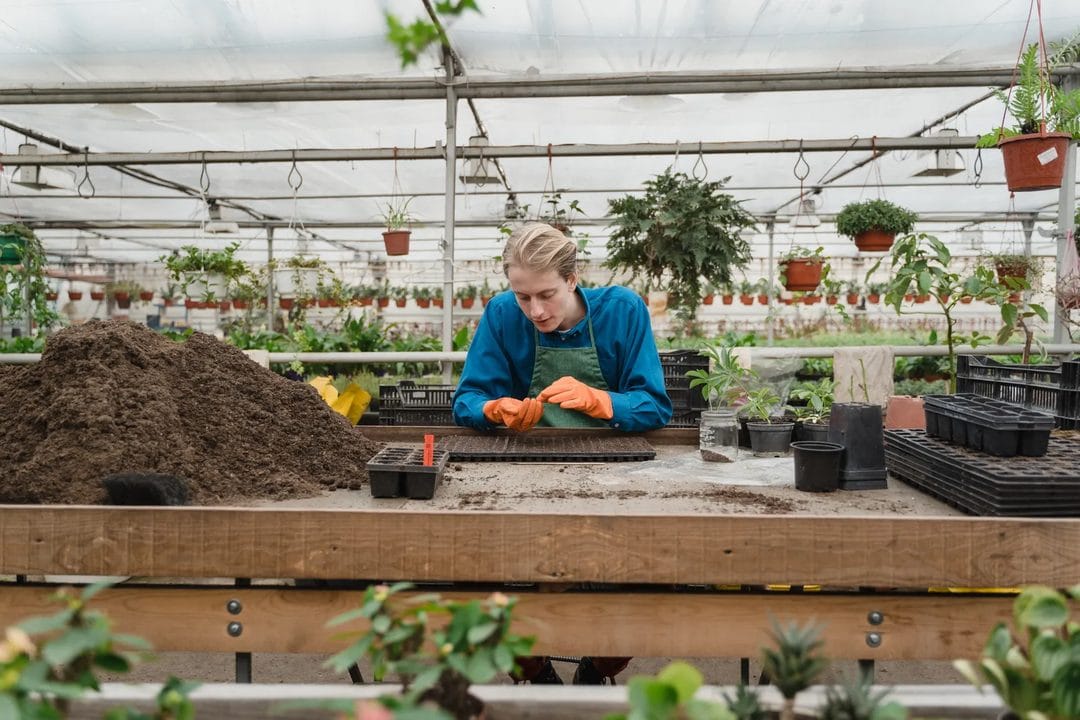
By the last week of August, most greenhouses look like a job that got away from someone. Tomato plants have gone leggy and blotchy at the base, the staging is crusted with old compost and spilled feed, and there's a smell of overripe fruit that means something's rotting under a leaf you haven't lifted in weeks. This is the point where a lot of gardeners either shut the door on it until spring or grab the strimmer cord and go in blind. Neither works especially well — a greenhouse left to its own devices over autumn breeds whitefly, red spider mite and botrytis in numbers that will still be waiting for you in March, and a rushed one-day blitz misses the jobs that actually protect next year's crop.
Pulling the last of the summer crop
Start by being honest about what's actually still producing. A tomato truss that's still flowering in late August won't ripen before the light drops off in October, so pinch out the growing tips now and let the plant put its remaining energy into the fruit already set. Green tomatoes that refuse to turn can be brought indoors and ripened on a sunny windowsill next to a banana — the ethylene gas the banana gives off speeds things along — or turned into green tomato chutney, which is one of the few genuinely good uses for a kilo of fruit that was never going to go red. Cucumbers and courgettes that have bolted or gone bitter should come out entirely; there's no reviving a plant that's put its energy into seed production instead of fruit. Once the productive plants are dealt with, pull everything else by the roots rather than cutting at soil level. Old tomato and cucumber stems left in the border soil are where blight spores and root-knot nematodes overwinter, and a stem cut at ground level just leaves the infected root system in place for next year's crop to grow straight into. Bag diseased material for the council green bin rather than the compost heap — home composting rarely gets hot enough to kill blight spores, and a domestic heap sitting at 40-50°C will happily preserve the problem for you. Healthy top growth with no sign of disease is fine on the compost heap as normal.
Washing the glass and scrubbing the staging
Algae and grime on the glazing block more light than most people realise, and by September the sun is already low enough that every percentage point matters. A wash with Jeyes Fluid diluted according to the bottle (roughly 1:10 for general cleaning) will strip algae, moss and the general summer film off both glass and aluminium glazing bars, and it's the same product allotment holders have used for decades because it actually kills overwintering pest eggs rather than just moving the dirt around. Do the inside first, working from the roof down so drips land on surfaces you're about to clean anyway, then tackle the outside on a dry, still day so the run-off doesn't just sit and streak.
The staging deserves the same attention as the glass, not an afterthought with a damp cloth. Empty every pot and tray off it, then scrub the surface with hot water and a splash of garden disinfectant — Citrox or a weak Jeyes solution both work — paying particular attention to the joints and corners where slug eggs and vine weevil grubs like to sit out the winter. Wooden staging is worth checking for rot at this point too; a greenhouse floor that's been damp all summer can soften the feet of a timber bench in a single season, and replacing a collapsed shelf full of seed trays in February is a far worse job than treating the wood now with a proper timber preserver.
Dealing with the pests before they move in for winter
Whitefly is the one that catches people out, because a greenhouse that looked fine in July can be a cloud of them by the time you open the door in late August. They won't survive outside once frosts start, but inside a heated or even just sheltered greenhouse they'll happily breed through winter and be waiting in force come April. Yellow sticky traps hung at plant height catch the adults, and a spray of SB Plant Invigorator or a soapy water solution knocks back the nymphs on the underside of leaves — do this before you bring any new plants in for winter, not after, or you'll simply be introducing them to a clean environment. Red spider mite is trickier because the damage — a fine bronze stippling on leaves — often gets blamed on drought stress instead. It thrives in exactly the hot, dry conditions a greenhouse produces in August, and a good clear-out is the best control measure you have, since the mites overwinter in the cracks of glazing bars and staging joints rather than on plants themselves. This is worth saying plainly: spraying alone rarely solves an established infestation, but a thorough physical clean genuinely does, because it removes the places the mites are hiding rather than just the ones you can see. Slugs and snails are the third repeat offender, sheltering under pots and seed trays left stacked on the floor — stand everything on end, hose it down, and you'll usually turn up a dozen or more you didn't know were there.
What actually earns its place under glass through autumn and winter
An empty greenhouse from October to March is a waste of a structure that probably cost somewhere between £600 for a basic 6x8ft aluminium model and £2,500 or more for a cedar-framed one from a maker like Alton or Gabriel Ash. Sow a winter salad mix now — mizuna, mustard 'Red Frills', lamb's lettuce and winter purslane will all germinate in the last of the warm soil and keep cropping through to Christmas with almost no attention. Overwintering onion sets and broad beans such as 'Aquadulce Claudia' also do well started under cover in September, giving them a head start that beats a spring sowing by several weeks once they go out in March.
- Winter lettuce (try 'Arctic King' or 'Winter Density') sown direct into greenhouse borders in early September
- Pelargonium and fuchsia cuttings taken now, before the parent plants get leggy, root well on an unheated bench through October
- Chrysanthemums and dahlias lifted before the first hard frost can be potted up and kept just ticking over — not growing, just alive — until you're ready to plant them out again
- Tender pot plants that spent the summer on the patio — citrus, olives and the odd pelargonium tub — need to come in before the first proper frost, not after it
A frost-free greenhouse — meaning one that never drops below about 2-3°C — is enough for most of this. You don't need a paraffin heater running constantly or a thermostatically controlled electric fan heater costing £40 a month to run; a simple horticultural fleece thrown over the more tender pots on the coldest nights, plus bubble wrap insulation stapled to the glazing bars, covers the gap for most of a mild UK autumn.
Ventilation and airflow matter more than most people think
Botrytis, or grey mould, is the single biggest killer of overwintered greenhouse plants, and it's caused almost entirely by still, damp air rather than cold. Even on a dull, chilly day, crack the roof vents open for an hour around midday when the temperature is at its peak — this lets the humid air that's built up overnight escape before it condenses on leaves and stems after dark. Watering in the morning rather than the evening matters here too, giving foliage the whole day to dry off before temperatures drop and condensation forms.
Automatic vent openers, the wax-cylinder type from Bayliss or Access Irrigation that cost around £25-35 each, are worth fitting if you don't already have them, because they open on a warm afternoon whether or not you happen to be home to do it manually. Don't be tempted to seal the greenhouse up completely once the weather turns properly cold — a small gap of airflow, even in December, does more to prevent disease than the marginal heat loss costs you in comfort for the plants inside.
Sorting what stays and what goes to the shed
Not everything belongs in the greenhouse over winter, and this is the bit people skip because it means admitting a summer purchase didn't work out. Grow bags that have already produced one crop of tomatoes are spent — the nutrients are gone and the structure has broken down, so don't be tempted to squeeze a winter lettuce sowing out of one. Empty them onto the compost heap or use the spent compost as a soil conditioner on borders elsewhere in the garden, where it still has value even though it's no longer good enough for direct cropping.
Plastic pots, seed trays and modules should be sorted, stacked by size, and the cracked ones binned rather than kept "just in case" — a stack of 200 assorted pots taking up half the staging is exactly the kind of clutter that gives red spider mite somewhere to overwinter. Canes, string and plant supports are worth a proper tidy too: bundle canes by length, coil string onto something you can find again in March, and bin any bamboo canes that have gone soft and splintery at the base, since a snapped cane through a hand while staking sweet peas next spring is not worth the 60p saved by not replacing it.
Once the glass is clean, the staging is scrubbed and the last of August's tomatoes are either eaten or bottled, a greenhouse cleared out properly in early September earns its keep right through to the following spring — not as storage for things you meant to deal with, but as the one part of the garden still quietly producing something while the borders outside go over.