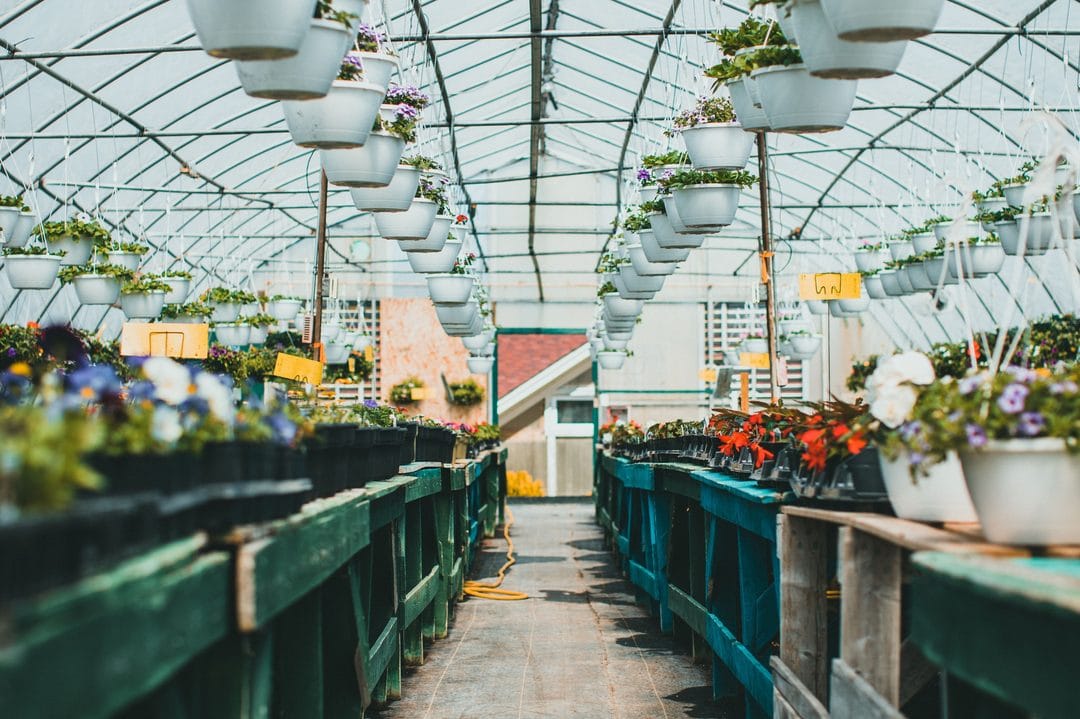
By half past ten on a clear July morning, the thermometer clipped to the glazing bar of an ordinary six-by-eight greenhouse can already be showing 38°C, and by early afternoon it isn't unusual to see 50°C recorded just under the ridge. Leave the door shut on a day like that and you don't get warm tomatoes — you get cooked ones, with leaves crisping at the tips and flowers dropping before they've had any chance to set fruit. A polytunnel is a little more forgiving because polythene diffuses light rather than focusing it the way glass does, but the airflow inside one is usually worse, so the heat that does build up has nowhere to go. Either way, the plant doesn't care what the structure is made of. It only cares whether the air around it is survivable.
The greenhouse is doing exactly what it was designed to do
That's the uncomfortable bit to accept. A greenhouse traps solar radiation on purpose — it's the entire point of the thing in March, when you want every extra degree you can get for seedlings. The same trapping effect that gets your chillies going six weeks early becomes a liability the moment outside temperatures push past about 25°C, because there's no upper limit built into the design. Glass and polythene don't know it's July. Tomato pollen starts losing viability above roughly 35°C, and by 40°C fruit set stops almost completely, which is why growers who leave the vents shut over a hot weekend come back to plants that flowered perfectly well but set nothing. Cucumbers and peppers sulk in a similar way, dropping flowers rather than fruiting them. None of this is a disease or a nutrient problem, even though it often gets treated like one — it's heat, plain and simple, and the fix has almost nothing to do with feeding or watering more and everything to do with getting air moving before the temperature climbs that high in the first place.
Ventilation has to be working before the heat arrives, not after
Roof vents do more work than side vents, because hot air collects at the ridge and needs somewhere to escape upward rather than sideways. If your greenhouse only has louvre vents low down and a door, you're relying on the door alone to shed heat, and that's rarely enough on a still July day when there's no breeze to pull air through. Prop the door open with a brick, add mesh if slugs and mice are a problem, and if the structure allows it, fit at least one roof vent even on the cheaper aluminium models that only came with side louvres as standard.
Automatic openers change the whole equation
A wax-cylinder automatic vent opener — the kind sold by Screwfix and B&Q for somewhere around £35 to £45 — expands with heat and pushes the vent open without any electricity or timer, then closes it again as things cool in the evening. It's worth more to a greenhouse in July than almost anything else you could spend that money on, because it solves the exact failure mode that ruins most people's crops: going to work at 8am when it's a mild 18°C outside, coming home at 6pm to find it hit 30°C at 1pm while the vent sat shut. Fit one to every roof vent you have, not just the biggest one — a single opener on a two-vent greenhouse still leaves half your ventilation capacity idle on the hottest day of the year.
The catch is that older wooden-framed greenhouses, the kind you find secondhand or inherited with a house, sometimes don't have the vent size or the stay mechanism to make an opener worthwhile — the push rod runs out of travel before the vent is even a third open, or decades of paint have swollen the frame enough that it won't move at all without a firm shove. On those, you're better off accepting that manual venting twice a day is the realistic option, and building it into your routine the same way you'd remember to lock the back door.
Shading stops the heat before it becomes a problem to solve
Ventilation deals with heat once it's already inside. Shading is the only thing that stops it arriving in the first place, and for anything grown under glass through a proper heatwave, you need both. External netting — rated around 55% shade, sold by specialists like Two Wests & Elliott and often stocked seasonally through garden centres — works better fixed on battens a few centimetres outside the glass than it does hung on the inside, because it intercepts the sun's energy before it's converted to heat inside the structure at all. Interior blinds still let most of that energy in; they just stop it dazzling you.
Shading paint is the cheaper, older-fashioned alternative, and it still has its place. A tub of Coolglass-type shading wash costs around £12 to £15, goes on with a brush or a sprayer straight onto the outside of the glass in late spring, and needs a scrub with a stiff brush and water to remove come autumn. Netting beats paint for anyone growing tomatoes or cucumbers into September, though, because you can take netting down for a few dull days and get full light straight back to the plants; a painted-on wash is a one-way decision you're stuck with until you physically wash it off, heatwave or not.
Polytunnels need a different kind of attention
A polytunnel from a specialist like First Tunnels usually comes with roll-up sides rather than roof vents, and those sides need to be up on both faces well before the tunnel starts heating, not once you notice it's stuffy inside. Cross-ventilation — air moving in one side and out the other — matters more in a tunnel than in a greenhouse, because there's no ridge vent pulling hot air straight up and out. Door mesh at both ends, left open rather than propped shut against cats, does more for airflow in a tunnel than almost any other single change, and it costs a fraction of what a full automatic venting kit runs to on a glasshouse.
Watering timing is where most people get it backwards
Get this one wrong and no amount of shading saves you.
Water early, ideally before 8am, so the compost is fully moist before the heat of the day arrives rather than dry and baking underneath a plant that's already stressed. Watering in the evening feels sensible — it's cooler, you're less rushed, and it fits round a working day far better than a 7am alarm does. But on a night that's still 20°C or more at 10pm, evening watering leaves warm, wet compost sitting for eight or nine hours before the air finally cools, and that combination of warmth and standing moisture is exactly what red spider mite and botrytis are waiting for. Midday watering has its own problem, and it's not really about scorching leaves — that part's overstated — it's that water poured onto baking compost at 1pm mostly evaporates before the roots get any benefit from it at all. Damping down the floor and staging, meaning splashing water over the path or gravel rather than the plants themselves, raises humidity and cools the air through evaporation, and it's worth doing both first thing and again in early evening on the hottest days. It won't drop the temperature by much on its own, but combined with proper ventilation it takes the edge off the driest, harshest hours. Get the timing right for a fortnight running and you'll notice the difference in how upright everything looks by four in the afternoon, rather than the usual wilted slump that recovers overnight but never quite catches up.
Capillary matting under pots, or a basic drip irrigation kit from somewhere like Hozelock or Access Irrigation running £40 to £90 depending on how many lines you need, takes the guesswork out of this for anyone who can't be home at 7am every day of a heatwave. It's not a luxury during a proper hot spell — it's the difference between compost that's evenly moist through the worst hours and compost that swings from bone dry to waterlogged because watering only happens once you're back from work and the damage is already visible.
What this actually looks like on the hottest days
On paper it sounds like a lot to manage at once, but in practice it settles into a short routine: vents and doors open (or checked, if you've fitted automatic openers) before you leave the house in the morning; shading up by late May and left up until the forecast turns; watering done early rather than late; and staging damped down once, maybe twice, on the days the forecast says will run hottest. None of that requires a greenhouse thermometer with a memory function or a smart plug — a cheap max-min thermometer from any garden centre, checked once a week, tells you everything you need to know about whether the current setup is actually working (the green algae film that builds up on the inside of the glass by August, incidentally, is usually a sign you've been damping down without venting enough alongside it).
The plants that make it through a July heatwave under glass aren't the ones grown by someone who fussed over feed schedules or bought a more expensive variety. They're the ones that never got hot enough to fail in the first place — which is a far duller answer than most people want, but it's the one that actually holds up when the forecast says thirty-two degrees three days running.