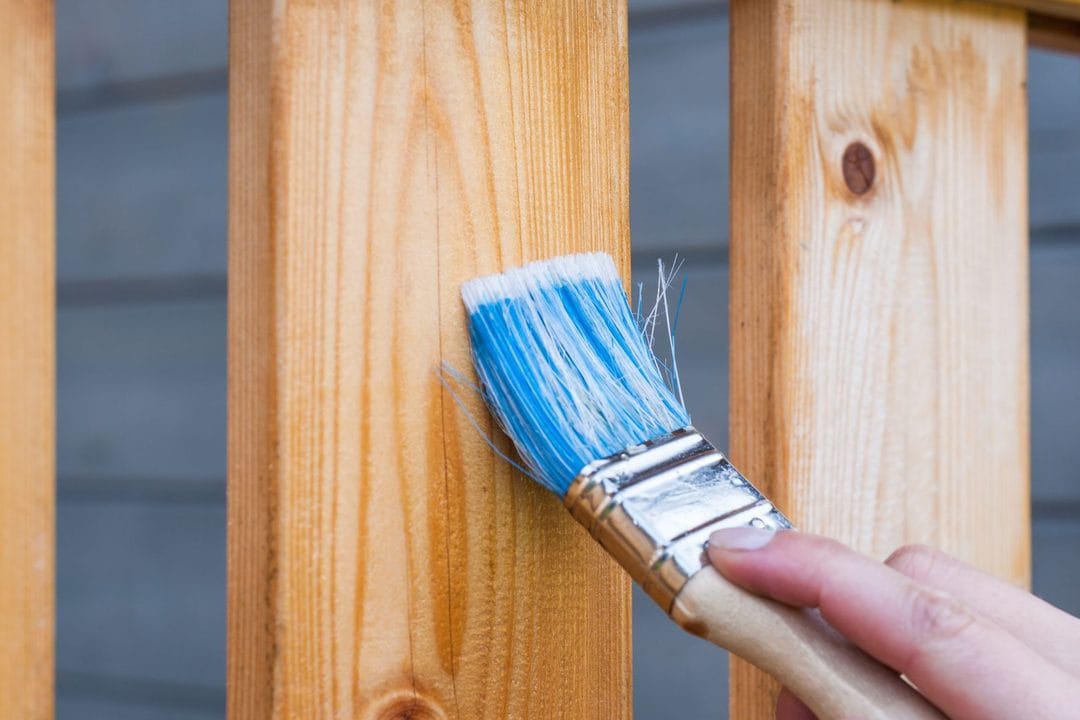
Walk down any residential street in the last two weeks of August and you'll see the same tell-tale signs: fence panels gone silver-grey and papery at the top edge, decking boards furred with a thin green film, shed doors that stick because the timber has swollen and shrunk all summer without a proper coat of protection. None of that is dramatic. It's also exactly the kind of neglect that turns into a £400 fence replacement or a rotten decking joist by next spring, because once the Met Office's fine spells give way to persistent autumn rain, exterior timber stops drying out properly between showers — and treatments applied to damp wood simply don't cure.
That's the real argument for doing this job now rather than in September. It isn't about beating a deadline for its own sake. Wood preservers, stains and oils all need a minimum number of consecutive dry hours to penetrate the grain and cure on the surface — Cuprinol specifies at least four hours of dry weather after application for its 5 Year Ducksback range, and longer if the air is cool. Once the jet stream shifts and southern England starts seeing its usual run of Atlantic fronts, you might get one dry afternoon between spells of drizzle. That's not enough. Late August, by contrast, still tends to offer three or four dry days in a row — the last stretch of the year where you can clean, let the timber dry out fully, then treat it and trust the coating to actually work.
Reading the moisture before you reach for a brush
Before any of this matters, check the timber is actually dry enough to treat — not just rain-free on the surface, but dry through the first few millimetres of wood. A cheap pin-type moisture meter from Screwfix (around £18) will tell you in seconds; anything under 18% moisture content is fine to treat, anything above that and you're better off waiting another day even if the sky looks clear. Morning dew is the trap most people fall into: treating a fence at 8am because it hasn't rained since Tuesday, when the top rail is still damp from overnight condensation. Wait until early-to-mid afternoon, once the sun has had a few hours on the wood, and you'll get a far better result.
Fences: clean first, then decide what you're actually treating
Most fence panels sold in the UK since 2015 are pressure-treated softwood, which means the tanalising process has already pushed preservative into the timber at manufacture. That doesn't make them maintenance-free — it buys time, typically 10 to 15 years before rot sets in, but the surface still needs a UV-blocking stain or oil to stop it silvering and splitting. If your fence is more than three or four years old and has never been treated since installation, scrub it down first with a stiff brush and a proprietary decking-and-fence cleaner (Ronseal's version is about £12 for 5 litres) rather than jumping straight to a jet washer, which can blast fibres loose and leave the surface fuzzy once it dries.
- Let the fence dry for a full day after washing before you treat it — not a few hours.
- Cuprinol's 5 Year Ducksback (around £24 for 5 litres at B&Q) is the sensible middle ground for most gardens: two coats, brushed or sprayed, and it holds colour well through a British winter.
- Sadolin's Superdec is worth the extra cost — closer to £45 for 5 litres — if the fence gets direct afternoon sun and you're fed up with reapplying every eighteen months.
- Don't treat both sides on the same day if the fence backs onto a neighbour's garden and you haven't asked; overspray drift onto next door's washing line is a genuinely common argument starter, so knock and say something first.
Skip the cheapest own-brand fence paint if you can stretch to Ducksback or Superdec. The saving is maybe £8 a tin, and the cheap stuff tends to need a third coat within two years to hold its colour — which wipes out whatever you saved and costs you another weekend.
Decking: the job everyone puts off until it's slippery
Decking gets ignored more than fencing because the damage is less visible from a standing position — you notice a grey fence from the kitchen window, but you don't notice a decking board losing its grip coating until someone's foot goes out from under them on a wet November morning. Algae and lichen build up through a damp spring and a humid summer, and by late August most decks in shaded or north-facing gardens have a fine green bloom that's already a slip hazard even before the weather turns properly wet.
The fix is more work than fencing, not less. Sweep off debris and moss from between the boards first — a cheap decking scraper (roughly £8 from Wickes) gets into the gaps a brush can't reach. Then apply a decking cleaner and let it sit for the full contact time on the tin, usually 10 to 15 minutes, before rinsing thoroughly. This is the step people rush, and it's the reason so many "cleaned" decks still look patchy once dry: the cleaner needs time to break down the biofilm, not just get sprayed on and hosed straight off.
Once it's dry — properly dry, ideally after a full 24 hours of no rain and reasonable airflow underneath — apply a dedicated decking oil rather than a fence stain. Fence stain film-forms on the surface and will peel and flake under foot traffic within a season; decking oil (Ronseal's Ultimate Protection Decking Oil, around £30 for 5 litres, or Cuprinol's equivalent) soaks into the grain instead, which is what lets it survive being walked on. Two thin coats beat one thick one every time, because a thick coat skins over on the surface without penetrating, and that skin is exactly what starts peeling by spring.
What decking oil won't fix
Oiling a deck with soft, spongy boards is a waste of a Saturday. Press a screwdriver into any board that looks discoloured or feels different underfoot — if it sinks in without much resistance, that board has already started rotting from the inside and no amount of surface oil will stop it. Replace it now, while the ground is dry enough to work on and while you can still buy matching decking board from Jewson or Travis Perkins without a special order. Left until spring, that one soft board is usually two or three by the time you get round to it.
Sheds and gates: the timber everyone forgets
Fences and decking get the attention because they're visible from the house. Shed roofs, gate posts and the undersides of gate rails get treated once, at installation, and then never again — which is exactly why so many garden gates start dropping and sticking within five years. A gate that's swollen with damp and dragging on the path isn't a hinge problem in most cases; it's an untreated end-grain problem, because end grain absorbs water many times faster than the flat face of a board and nobody ever thinks to treat the cut edges separately. Before you tighten a sagging gate hinge or pack it with washers, check whether the timber itself has swollen — forcing a wet gate square just strains the hinge screws and pulls them loose from the post within a year. Galvanised gate hardware from Screwfix costs very little, usually under £15 for a full hinge-and-latch set, so there's no excuse for bolting new fittings onto timber that's still damp through the middle. Treat the gate first, let it dry and settle back to its normal width over a few days, and only then decide whether the hinges genuinely need adjusting.
Sheds need two different products for two different surfaces, and this is where most people get it wrong by using one tin for the lot. Shed roofs — usually felt or a shed-specific roofing product — need a bitumen or acrylic roof treatment, not wood stain, if the felt is starting to crack or lift at the seams; a 5-litre tin of roof seal from B&Q runs about £22 and will buy another two or three years before a full re-felt is needed. The walls and door, by contrast, take an ordinary exterior wood preserver or stain, and the door in particular deserves a coat on all four edges, not just the two visible faces, because that's where water sits longest after rain.
If your shed base has settled unevenly and the door no longer closes flush, treating the timber won't solve that — plane the door down slightly before you treat it, otherwise you're sealing a gap that lets damp track straight into the door's edge grain every time it rains sideways.
What actually happens if you leave it until October
Skip this window and the maths changes, not just the weather. Once the days shorten and average temperatures drop below roughly 10°C, most exterior wood coatings stop curing properly even if you catch a technically dry afternoon — the chemistry that lets an oil or stain harden needs both dryness and a minimum temperature, and October in most of the UK struggles to hold both at once. That means anything you don't treat by the second week of September is realistically waiting until next April or May, which is six to eight months of an unprotected fence or deck sitting through the wettest part of the British year.
Untreated softwood loses roughly 1–2mm of surface fibre a year to UV and moisture cycling even without active rot, according to timber trade guidance from the Wood Protection Association — not catastrophic on its own, but it compounds. A fence that should last fifteen years on a normal treatment cycle can be down to eight or nine if it goes two winters without a coat, and by the time splitting and silvering are obvious enough to notice from the kitchen window, you're usually looking at replacement rather than restoration.
So the honest recommendation, not the hedged one: block out one full weekend before the second week of September, buy more product than you think you need (a half-used tin of Ducksback left over from last year has usually gone thick and unusable by now), and do the fence, the deck and the shed door in that order — fence first because it dries fastest, decking last because it needs the longest dry run afterwards before anyone can walk on it. Miss this fortnight and the next realistic slot is Easter.