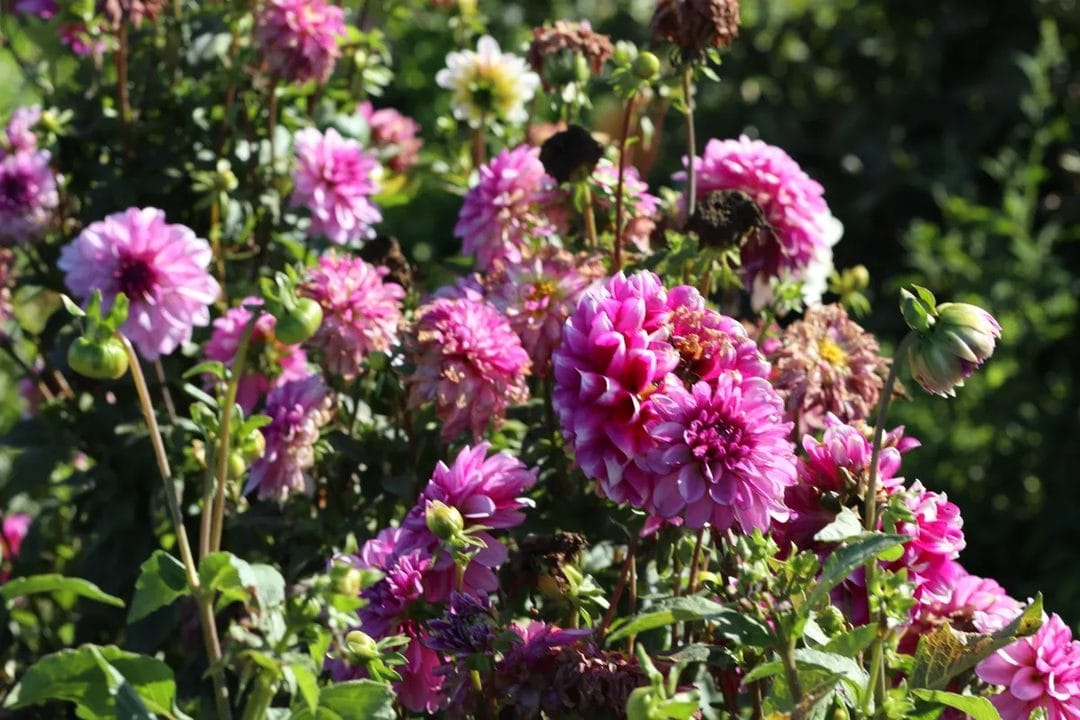
The first proper frost of the autumn doesn't announce itself. One morning the dahlias that were still throwing out flowers on Tuesday are black mush by Thursday, and the gladioli leaves have gone the colour of wet cardboard. If you haven't already worked out what you're lifting and what you're leaving in the ground, you've got about a week's grace before the decision gets made for you.
Why lift anything at all
Dahlias, gladioli, begonias and canna lilies are all tender by origin — Mexico, South Africa, the Andes, depending on which one you're growing — and none of them evolved to sit in cold, wet British clay through a winter of freeze-thaw cycles. The tuber or corm itself can usually survive a light frost above ground; what kills it is the rot that sets in once the soil around it stays saturated for weeks on end, which is exactly what most of the country gets between November and February. Clay soil is the worst offender here, since it holds water like a bucket, while a well-drained sandy loam in the milder counties gives the roots a genuine fighting chance of coming through unlifted.
That regional difference matters more than most guides admit. Gardeners in Cornwall, the Isles of Scilly or sheltered pockets of the south coast can often get away with leaving dahlias in situ under a thick mulch, and plenty do, year after year, without losing a plant. Try the same trick on heavy Midlands clay or anywhere north of Sheffield and you're gambling with tubers that cost anywhere from £4 to £15 each for a decent named variety from a supplier like Sarah Raven or Peter Nyssen. Lift them. The insurance is cheap next to the loss.
Timing: wait for the blackening, not the calendar
The textbook advice says lift after the first frost blackens the foliage, and that's still the right rule for most of the UK, because the plant uses that final cold snap to pull the last of its energy down into the tuber before the top growth dies off. In practice this usually lands somewhere in the second half of October for dahlias, a little earlier for canna and gladioli, which are less frost-hardy at the leaf. If you garden somewhere that regularly gets an early frost — inland valleys, anywhere with a frost pocket, the colder parts of Scotland — don't wait for a hard freeze that could damage the tuber itself; lift as soon as the foliage has taken a knock and gone soft and dark.
Gladioli corms are a slightly different case, since they're often ready to come up well before any frost threatens. The rule of thumb is six weeks after flowering finishes, once the leaves have started to yellow from the base upward. Leave them in too long past that point in a wet autumn and the new cormlets clustered round the base can start rotting before you've even got a fork under them.
The lifting process
Cut the top growth down to around 10-15cm above soil level a few days before you actually dig, which lets any sap left in the stems drain back and reduces the risk of water sitting in a hollow stem and travelling down into the crown. Use a garden fork rather than a spade — a spade slices tubers clean through far more often than people expect, and a dahlia tuber with a fresh cut is a rot risk waiting to happen. Work in a wide circle around the plant, well clear of where you think the tubers end, and lever up gently from underneath rather than stabbing straight down.
Once the clump is free, shake off the loose soil by hand rather than hosing it down. Washing tubers clean looks tidy and satisfying, and it is genuinely one of the more common ways people lose their collection over winter — wet tubers going into storage are the single biggest cause of rot, full stop. A dry brush or your fingers, working the soil off gradually, does the job without introducing moisture you'll spend the next four months trying to get rid of.
Drying, curing and storage
Turn the lifted clumps upside down for a few days somewhere frost-free, dry and airy — a garage, shed or unheated porch all work, so long as there's no risk of frost getting in overnight. This lets any residual moisture in the hollow stems drain out through the cut. Don't leave them out for weeks on end chasing perfect dryness, though; a few days is enough, and beyond that you're just risking the tuber shrivelling.
Once dry to the touch, pack the tubers or corms into boxes or trays with a dry medium around them — vermiculite is the standard choice, widely available from any decent garden centre for a few pounds a bag, and it insulates without holding damp against the tuber skin the way compost sometimes can. Dry, spent compost works fine too if that's what you've got, and some gardeners swear by dry sand, though sand tends to be heavier and less forgiving if it picks up any moisture from a leaky shed roof. Whichever you use, the tubers shouldn't be touching each other, and they shouldn't be packed in tight — air needs to move.
Store the boxes somewhere consistently cool and frost-free, ideally between 5°C and 10°C. A garage against an internal wall, an unheated spare room, or a shed with decent insulation all work; what kills tubers over winter is either freezing solid or, just as often, a mild, damp shed where condensation builds up on the inside of the walls. An old wardrobe or chest of drawers in an unheated outbuilding does the job better than most people expect, purely because it buffers temperature swings.
Label everything before you forget — and you will forget, because "Bishop of Llandaff, obviously, I'll remember that one" is exactly the sentence every dahlia grower regrets by February. A luggage tag tied to the stem base or a waterproof marker directly on the box lid takes thirty seconds and saves an entire spring of guessing which colour is coming up where.
Checking through winter
Go back to the boxes roughly once a month right through to March. You're looking for two things: any tuber that's gone soft, discoloured or slimy, which needs cutting away or binning entirely before it spreads rot to its neighbours, and any tuber that's shrivelled and gone leathery, which usually means the storage spot is too dry and warm rather than too cold. A light misting of the vermiculite, not a soaking, brings shrivelled tubers back reasonably well if you catch it early. Ignore the boxes until spring and you'll open them to find one bad tuber has taken out half the box — it happens more often than any dahlia forum will admit.
Canna rhizomes are a little more forgiving of a slightly damp storage medium than dahlias, since they're naturally chunkier and less prone to rot, so if you're storing both together in the same shed, don't apply dahlia-strict dryness rules to the canna box and expect the same result — treat them separately if you can.
What can stay in the ground
Not everything needs digging up, and treating every tender bulb the same way is where a lot of gardeners waste an autumn weekend. In genuinely sheltered, free-draining gardens — south-facing borders, raised beds, anywhere the soil is more grit and loam than clay — a thick mulch of bark chip or garden compost, 10-15cm deep, piled over the crown after cutting back, gets many dahlia varieties through a normal English winter without lifting at all. It's a gamble in a hard winter, and a run of two or three mild ones will make you overconfident right before the year it goes wrong, but plenty of gardeners in the milder half of the country do exactly this every year and simply accept the occasional loss as the cost of not spending a Saturday afternoon in the shed.
Gladioli are less forgiving of this approach almost everywhere outside the very mildest coastal gardens, and canna in a heavy clay bed is asking for trouble left unlifted. If you're not sure which category your garden falls into, lift one row and leave one row this year, and let the results over winter make the decision for you next time.
Autumn tender bulb checklist
- Cut foliage back to 10-15cm a few days before lifting, so sap drains from the stems
- Lift with a fork, not a spade, working well outside the crown
- Shake soil off dry — never wash tubers before storage
- Dry upside down for a few days somewhere frost-free and airy
- Pack in vermiculite, dry compost or sand, tubers not touching
- Store at 5-10°C, away from both frost and damp condensation
- Label every box or tag now, not "later"
- Check monthly through winter for rot or shrivelling, and act on the first sign of either
- Only leave tender bulbs in situ if your soil is genuinely free-draining, and mulch generously if you do