Walk into any half-decent UK garden centre in the second week of September and you'll find the same scene: net bags of garlic bulbs stacked next to trays of onion sets, both labelled with the same phrase — autumn planting — while most shoppers walk straight past towards the spring bulb display for daffodils and tulips instead. That's a mistake, because September is genuinely the better month for garlic and for a handful of hardy onion varieties, not a fallback for gardeners who missed the spring window. Garlic planted now has roughly eight months to build a proper root system before it needs to bulk up bulbs next June, and that head start is the single biggest factor in whether you end up with fat, well-formed heads or the sad, marble-sized bulbs that spring-planted garlic so often produces. Onions work slightly differently — only specific overwintering varieties tolerate a UK winter sitting in open ground — but get the variety right and you're harvesting in June, a full month or more ahead of anything sown in spring. None of it requires a greenhouse, a polytunnel, or any tool beyond a trowel and a decent border fork. It does require getting the timing, the variety and the ground preparation right, and that's exactly where most first attempts go wrong.
Why Garlic Wants a Cold Start
Garlic needs vernalisation — a sustained spell of cold, typically six to eight weeks below 10°C — to split into individual cloves rather than forming a single undivided bulb. Miss that cold period and what you harvest next summer looks more like a swollen spring onion than anything worth putting through a garlic press. September and October planting gives the cloves the whole winter to hit that threshold on their own; anyone forced into a February or March planting has to fake it by refrigerating the bulbs for four to six weeks beforehand, which works but adds a faff most people would rather skip entirely.
Choosing a Variety: Hardneck or Softneck
Elephant garlic isn't actually garlic at all — it's a leek relative that happens to form a garlic-shaped bulb, and it tastes noticeably milder.
Proper garlic splits into two camps, and UK seed merchants sell both. Softneck varieties — Thompson & Morgan and Suttons both list "Provence Wight" and "Solent Wight" — store for eight to ten months in a cool, dry spot, shrug off a mild wet winter better than most, and suit anyone who cooks with garlic weekly right through the following summer. Hardneck types such as "Lautrec Wight" or "Carcassonne Wight" produce fewer but noticeably larger cloves, throw up an edible flower stalk called a scape in early summer that's worth harvesting for stir-fries in its own right, and generally carry a sharper, more complex flavour, but they won't keep much past Christmas. Price rarely decides it either way, since a net of either type from Suttons or Marshalls sits within a pound or two of the other — the real trade-off is storage life against flavour, not budget. Gardeners on heavy clay or in the wetter west of the country tend to do better with softneck, simply because it copes with a soggy February without the cloves going soft, while hardneck varieties are the more forgiving choice on free-draining sandy or chalky ground further east. For most gardens, softneck is the better all-round choice — reach for hardneck only if you specifically want the scapes or the stronger flavour and don't mind using the whole crop up by December. Either way, buy from a seed merchant rather than a supermarket shelf, for reasons that come down to more than just taste.
What a Row Actually Costs
The maths on garlic is better than most people expect once you work out the cost per clove rather than per bulb, and onions aren't far behind on value either. Here's roughly what a September trip to a UK garden centre or seed merchant costs, based on typical 2026 autumn-planting stock.
- A net of three seed garlic bulbs (roughly 15–20 cloves between them) runs £5–£7 from Thompson & Morgan or Suttons — each individual clove grows into its own full bulb, so that works out to well under 50p per eventual head.
- Wilko and B&Q both stock loose bulk garlic bulbs by weight in September, usually £3–£4 for 250g, which is the cheapest route if you're filling an entire bed rather than a border edge.
- Onion sets for genuine overwintering varieties — "Radar", "Troy", or the Japanese "Senshyu Yellow" — cost roughly £3–£5 for a net of 60–75 sets from Dobies or Marshalls, and that single net is usually enough for a small household's onion needs for a year.
- Prices creep up by fifty pence or so per net once October arrives and the early stock thins out, so buying in the first half of September saves a bit and gives the widest choice of variety.
Skip the garlic bulbs in the supermarket vegetable aisle, however tempting the price. Supermarket garlic is mostly imported from Spain or China and bred for a milder growing climate, and unlike certified UK seed garlic it hasn't been tested for soil-borne diseases such as white rot — a fungal problem that, once it's in your soil, can persist for a decade or more with no reliable cure. It's one of the few places where paying three or four times more for a properly labelled seed bulb is a straightforwardly better decision, not just a cautious one.
Preparing the Ground
Both garlic and overwintering onions want the same thing from soil: full sun, sharp drainage, and a pH close to neutral, somewhere between 6.5 and 7. Heavy clay is the main obstacle for most UK gardens, and the fix isn't complicated — dig in a bucket of well-rotted manure or garden compost per square metre a couple of weeks before planting, and if the ground still puddles after rain, raise the bed by 10–15cm with extra compost or a proper raised-bed frame rather than fighting waterlogged soil all winter. Freshly manured ground straight before planting is worth avoiding; it tends to produce soft, blowsy bulbs and can encourage rot right through the wettest months.
Planting Garlic Step by Step
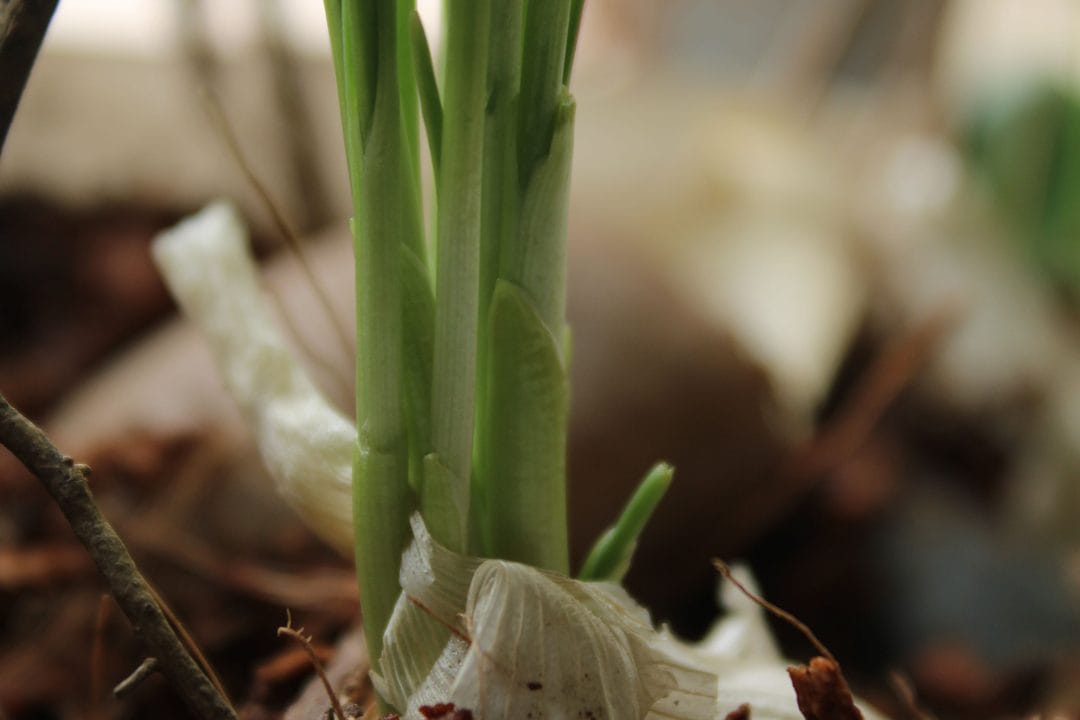
Break each bulb into individual cloves only immediately before planting — cloves left exposed to the air for more than a day or two dry out and lose vigour fast. Push each clove pointed-end up into loosened soil so the tip sits about 2cm below the surface, spacing cloves 15cm apart in rows 30cm apart. Firm the soil gently over the top, water once to settle it in, and then largely leave it alone; garlic doesn't want regular watering through autumn and winter, and overwatering at this stage is a far more common mistake than underwatering. Shoots typically appear within three to four weeks, sometimes later if the first cold snap arrives early.
Getting Overwintering Onions Right
Onion sets go in slightly shallower than garlic cloves — just enough that the tip is visible above the soil — spaced 10cm apart in rows 25cm apart. The one job that catches out almost everyone new to autumn onions is birds: blackbirds and pigeons treat freshly planted sets as a game, tugging them straight back out of loosened soil within days of planting, sometimes leaving them scattered across the bed rather than eaten. A length of horticultural fleece or chicken wire pinned over the row for the first fortnight solves it completely, and it's a five-minute job that saves having to replant the whole row in October. "Senshyu Yellow" is the variety most UK seed catalogues push for reliability, and it earns that reputation — it tolerates wet winters better than most red varieties and typically bulks up for a June harvest rather than July. Sets themselves aren't infallible, though: a larger set (anything over about 16mm) is more prone to bolting — running straight to a flower stalk in spring instead of forming a bulb — because the set is essentially already a year-old onion that reads a mild winter as an invitation to reproduce. Buying the smaller sets in a net costs the same and mostly avoids the problem.
What Goes Wrong
The two failures that account for most disappointing autumn-planted crops are frost heave and rot, and they pull in opposite directions. A hard frost followed by a rapid thaw can physically push shallow-planted cloves and sets partway out of the ground, exposing the tip to cold air and drying wind — walk the bed after any sharp frost through December and January and gently firm back in anything that's lifted. Rot is the other direction: a mild, wet winter with poor drainage rots cloves in the ground before they've even had the chance to root, which is why the drainage work in September matters more than almost anything done after planting. Get both of those right and the main task between November and March is simply weeding around the emerging shoots — garlic and onions are poor competitors against chickweed and grass, and a bed left unweeded through winter can lose real yield to something that takes ten minutes a fortnight to prevent.
Harvest timing is its own small skill worth mentioning here: pull garlic when the lower third of the leaves has yellowed and died back, not when the whole plant looks finished, because waiting too long causes the papery wrapper around each bulb to split and the cloves to separate in the ground — a bulb harvested two weeks too late stores for a fraction of the time.