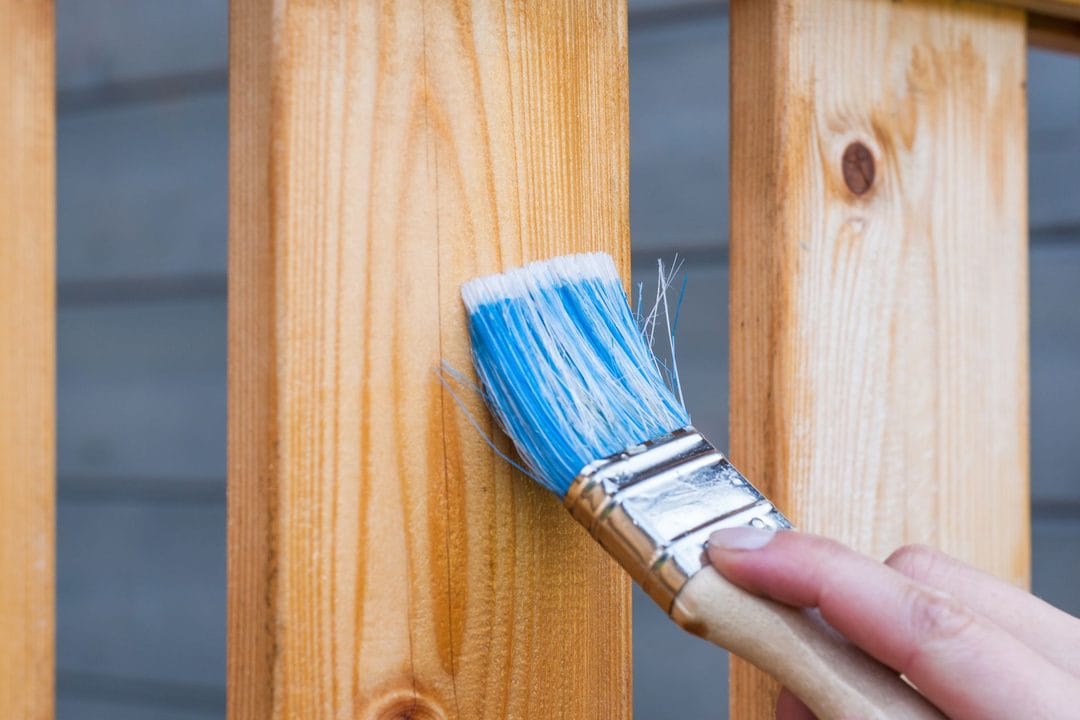
The fence panels have gone that silvery grey, the shed door is flaking, and the bench you bought three summers ago looks like it has been left out in a skip. A long dry spell in late June is the one window in the British year when you can actually do something about all of it — wood needs to be bone dry before any stain or oil goes on, and that almost never happens between October and May.
I spent a Saturday and a Sunday last June working through a back garden's worth of tired timber: two fence runs, a 6x4 shed, a pergola and a teak-effect bench. None of it was hard. Most of the cost was in the prep, the brushes and the patience, not in the products themselves. What follows is the order I'd do it in again, the products that actually held up over the wet winter that followed, and the few corners that are not worth cutting.
Start with a forecast, not a brush
Check the Met Office forecast for a stretch of at least three dry days before you open a single tin. Most water-based fence treatments are touch-dry in an hour or two but want a good 24 hours before rain, and oils for hardwood furniture want longer still. A shower an hour after you finish a fence panel will streak the colour and you will be doing it again. June and early July, after a few rainless days, is usually your best bet — the timber has had time to dry right through, not just on the surface.
One thing people forget: morning dew counts as wet. Don't start brushing at 7am on freshly damp panels. Give the sun an hour or two to lift the moisture off, then go.
Cleaning comes before colour
Bare or weathered wood is rarely just dirty — it usually has a thin layer of green algae and a grey, degraded surface that any new coating will simply sit on top of and peel away from. You want to get back to sound timber.
For fences and sheds, a stiff brush and a bucket of diluted exterior cleaner does most of the work. Ronseal's 30 Seconds Spray & Leave is about £8–£10 for a 5-litre concentrate at B&Q, and it shifts the green growth without scrubbing. If you own or can borrow a pressure washer, even a cheap one like a Nilfisk Core (around £100 at Screwfix) makes the job far quicker — but keep it on a fan nozzle and stand back, because a pinpoint jet at close range will tear soft pine fibres apart and leave a furry, ruined surface.
Let everything dry fully after washing. This is the step that catches people out: you wash on Saturday, the surface looks dry by lunchtime, and you start staining — but the timber underneath is still holding water and the finish never properly keys. Wash one day, coat the next.
Fences and sheds: stain, not paint
For larger areas of softwood — fence panels, shed cladding, trellis — a spirit-free wood stain or a shed-and-fence treatment is the sensible choice. It soaks in rather than forming a film, so when it does eventually fade it goes patchy rather than peeling, and a refresh coat goes straight over the top.
My honest recommendation after a wet winter: Cuprinol Ducksback (around £18 for 5 litres, covers roughly 5 panels) held its colour and shrugged off the rain better than the cheaper own-brand fence paint I tried on a second run, which looked tired again by spring. The own-brand saved me about £6 a tin and cost me a full re-do — not a saving.
A few things that make the difference between a tidy result and a blotchy one:
- Work panel by panel, top to bottom, and keep a wet edge — don't let one section dry before you blend the next into it, or you'll see the join.
- A 100mm fence brush moves far more product than a roller and gets into the grain. Rollers leave the recessed bits bare.
- Do the end grain and the bottom rails generously — that's where water sits and rot starts. The flat faces everyone remembers; the edges are where panels actually fail.
- Two thin coats beat one thick one every time. A thick coat skins over, traps solvent, and stays tacky for days.
If your fence is shared with a neighbour, a quick word over the fence before you change its colour saves an awkward conversation later. Legally the boundary side is usually theirs to treat, but in practice nobody minds a freshen-up — they just like being asked.
Garden furniture is a different job
Don't treat a teak bench like a fence panel. Hardwood furniture wants oil, not stain — and the prep matters more than the product. Garden furniture that has gone grey hasn't rotted; the surface has just oxidised and lost its oils. A light sand with 120-grit paper takes the grey off and opens the grain back up, and the wood underneath is usually a warm honey colour again within a few passes.
Then a hardwood or teak oil — Liberon and Osmo both do good ones, roughly £15–£25 for a tin that will do a table and chairs — brushed on, left 15 minutes, and wiped back with a cloth. That wiping-back step is the one people skip, and it's the one that matters: oil left sitting on the surface goes sticky and attracts dust, whereas oil wiped back leaves the wood fed and dry to the touch. Two thin applications, a day apart, and the bench will see you through to next summer.
Softwood furniture — the cheaper pine sets — is better off with the same treatment as the fence, or a coat of exterior wood paint if you want it a colour. It will never look like teak, so don't oil it expecting magic.
Metal, hinges and the bits you'll regret ignoring
While the brushes are out, the metalwork is worth ten minutes. Shed hinges and gate latches that have started to bleed orange rust will only get worse, and the run-off stains the timber you've just treated. A wire brush, a wipe, and a coat of Hammerite direct-to-rust (around £12 a tin at Toolstation) stops it. A squirt of GT85 or 3-in-1 on the hinges while you're there means the gate stops squealing every time the dog goes out.
Gutters on the shed, too. If there's a water butt fed off the shed roof, clear the leaf gunk out of the gutter now — it's a two-minute job dry, and a miserable one in October when it's overflowing down your neck.
What it actually costs and how long it takes
For an average back garden — two fence runs, a shed and a bench — budget somewhere around £60–£90 in materials if you're starting from scratch on brushes and cleaner, and closer to £40 if you've already got the kit. The brushes are reusable for years if you clean them properly: water-based stuff washes out under the tap, oils need white spirit.
Time-wise, set aside a weekend and don't try to do it all in one day. Wash Saturday morning, coat Saturday afternoon where things have dried, finish Sunday. Rushing it — staining over damp timber, slapping on one heavy coat to be done by teatime — is exactly how you end up redoing the lot next June.
The fence I cut corners on lasted one winter. The one I did properly still looks like I treated it last month. That's the whole argument for doing it slowly while the sun's out.