Buy a shed from Wickes or B&Q, put it up over a bank holiday weekend on a patch of bare soil, and you'll have a serviceable structure by Monday evening. Come back in eighteen months and the door will be dragging on the frame, the felt roof will have taken on a slight list to one side, and there's a good chance damp has already started travelling up the timber from underneath. None of that is a manufacturing fault. It's what happens when a shed sits directly on soil that moves with the seasons instead of on something that doesn't.
There are three realistic base options for a standard garden shed in the UK: a full concrete slab, paving slabs laid on a compacted sub-base, and a plastic interlocking grid filled with gravel or laid on compacted hardcore. Each one solves the same underlying problem — keeping the shed level, dry and off the ground — but at a completely different price and with a completely different amount of weekend labour attached. Get the choice wrong in one direction and you overspend on a base built for a workshop when you've actually bought a 6x4ft bike store from Homebase. Miss it in the other direction, though, and you're laying a bag of gravel under something that's going to end up full of power tools, paint tins and a chest freezer within a year. The right answer depends almost entirely on the size of the shed, what's going inside it, and how forgiving the ground underneath actually is. None of the three options is objectively "best" — despite what most shed retailers' websites imply when they only ever mention the cheapest one in the small print.
Why the Base Decides How Long the Shed Actually Lasts
Timber sheds fail from the bottom up, not the top down. Ground moisture wicks into the base plate and the bottom few inches of the wall panels long before the roof felt gives out, and by the time you notice soft, spongy timber around the door frame, the rot has usually been working for a year or two already. A concrete or paving slab base breaks that contact between soil and timber outright, and a gravel-filled plastic grid does much the same job by keeping standing water away from the base plate rather than letting it pool. Skip a proper base altogether and even a well-built shed from a decent manufacturer — Shire, Rowlinson, Forest Garden, whichever — will typically need base plate repairs within three to five years. That repair, done properly, often costs close to what a proper base would have cost in the first place, which makes skipping the base one of the more expensive shortcuts in garden DIY.
A Full Concrete Slab: The Most Expensive Option, and the Only One That's Truly Fit-and-Forget
A poured concrete slab is the base against which everything else gets measured, and it's the right call if you're putting up anything over 10x8ft, using the shed as a proper workshop with a table saw or welding kit, or building on ground that's genuinely soft — a reclaimed flower bed, an old vegetable patch, anywhere with a lot of organic matter still breaking down underneath. Materials for a DIY pour — hardcore, sand, ready-mix bags or a mixer hire, membrane and timber edging — run to roughly £25 to £35 per square metre from a merchant like Jewson or Travis Perkins, so a slab for an 8x6ft shed (around 4.5m²) comes in somewhere around £130 to £160 in materials alone if you're doing the labour yourself. Pay a local groundworker to excavate, shutter and pour it for you instead, and the same job runs closer to £600 to £900 once labour, tool hire and a skip for the spoil are added in, depending on access and how much lawn needs digging out first.
It's also the one base you can't easily change your mind about. Once it's down, that's where the shed lives — permanently, and usually for the next twenty-plus years. That permanence is exactly why it's overkill for a small storage shed you might replace or relocate within five years; you'd be pouring a driveway-grade base under something that cost £300 from Homebase.
Paving Slabs on a Compacted Sub-Base: The Middle Ground Most People Actually Choose
Get the sub-base wrong here and the whole thing tells on you within a single wet winter.
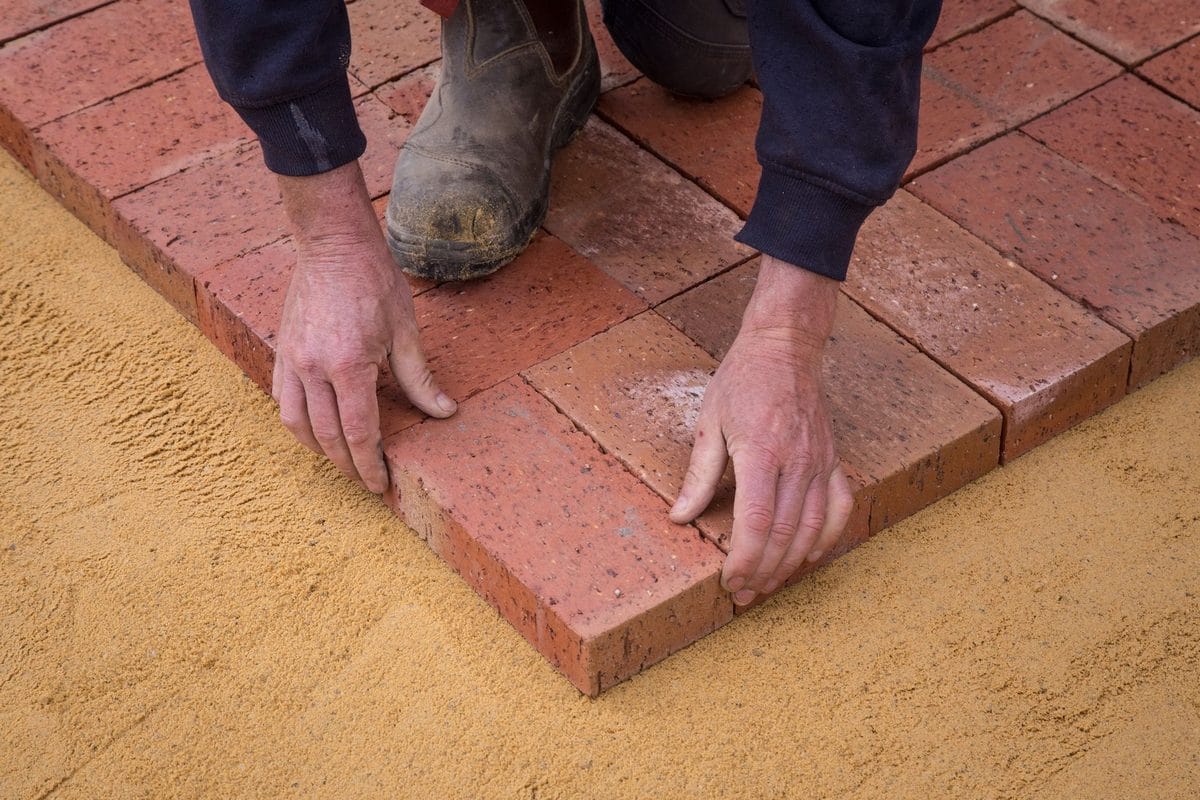
This is the option most sheds in Britain actually sit on, mostly because it's a realistic weekend job for one reasonably fit person and doesn't need a mixer or a groundworker. Dig out roughly 100–150mm of topsoil across the footprint, add a compacted layer of MOT Type 1 hardcore, bed 600x600mm paving slabs on a mortar or sharp sand base, and point the gaps once they're level — that's the whole method, and none of it needs specialist plant. B&Q sells standard grey 600x600mm slabs at around £9 to £14 each depending on thickness and finish, and Wickes runs similar pricing on its own-brand range; for an 8x6ft footprint you'll need roughly thirteen slabs, plus a few bags of sharp sand and MOT Type 1, putting total materials somewhere between £160 and £230. Buy riven or textured slabs instead of the cheapest smooth ones and you'll pay closer to £16 to £20 each — worth it if the base will be visible from the patio, not worth it tucked away behind a fence where nobody will ever see it. The part people skip is the compaction, and it's the part that actually matters. Slabs laid straight onto loosened soil, or onto hardcore that's only been walked on rather than compacted with a plate compactor or hand tamper, will settle unevenly over the first winter as the ground beneath them freezes, thaws and resettles. A hired plate compactor costs about £40 to £60 for a half-day from a tool hire firm such as HSS or a local independent, and running it over the sub-base twice before laying a single slab is the difference between a base that's still level in five years and one where you're re-bedding two corners by next spring.
Plastic Interlocking Grids: The Fastest and Cheapest Base, With One Real Limitation
Plastic shed base grids — sold as eco-grids or ground grids by Homebase, B&Q and specialist suppliers such as Ecobase — are interlocking honeycomb panels that lock together over compacted ground and then get filled with pea gravel or crushed stone. An 8x6ft kit typically costs £70 to £120, and because there's no mortar, sand-bedding or curing time involved, a competent DIYer can have the whole thing down, filled and ready for the shed to go up on the same afternoon. That speed is the entire selling point, and for anything up to about 8x6ft holding garden tools, a mower and a couple of bikes, it does the job perfectly well.
Where it falls down — sometimes literally — is under real weight concentrated on a small footprint. A shed with a heavy workbench, a stack of stored paving slabs, or a mounted vice puts point loads on the grid that gravel alone doesn't always resist evenly, and owners who've gone this route for a workshop-style shed sometimes report the base flexing slightly underfoot within a year or two. For a genuine workshop, or anything over roughly 10x8ft, skip the grid and go with slabs or concrete instead.
Ground Prep Costs the Same Whatever You Choose on Top
Whichever base you land on, the groundwork underneath doesn't change much. You need to excavate to a level, weed-free surface, remove turf and roots rather than build over them, and lay a permeable weed membrane before adding hardcore — skip the membrane and you'll be pulling bindweed up through gravel within two summers. Budget for a fairly short shopping list before you start:
- Weed membrane — around £15–£25 for an 8x6ft base from Wickes or Toolstation
- MOT Type 1 hardcore — roughly £4–£6 per bag, with most small bases needing six to ten bags
- A decent spirit level and a rake, which matter more than people expect once you're trying to keep a sub-base flat across three metres
- Extra hardcore or timber if the ground slopes, a skip or council bulky waste booking if you're clearing a lot of turf and topsoil, and similar odds and ends depending on the site
If the existing ground has a significant slope — more than about 50mm of fall across the shed's footprint — budget extra time for building up the low side with hardcore rather than trying to level a slab or grid across a slope with packing alone, which rarely sits right for long.
Which Base Actually Makes Sense for Your Shed
For a small storage shed under 8x6ft holding nothing heavier than a lawnmower and some tools, the plastic grid is the better choice — it's roughly a third of the price of slabs, goes down in an afternoon, and there's no reason to pay for permanence you don't need. Paving slabs are worth the extra weekend of labour for anything from 8x6ft up to 10x8ft, particularly if it'll be visible from the house or used as a summer house rather than pure storage: they look better, they're easier to repair if one corner settles, and they hold their value if you ever sell the house. Concrete only earns its cost on genuine workshops, anything over 10x8ft, or ground that's too soft to trust with anything less. And if that's your situation, get a groundworker's quote before committing to a DIY pour — the tool hire and skip costs add up faster than the concrete itself ever does.