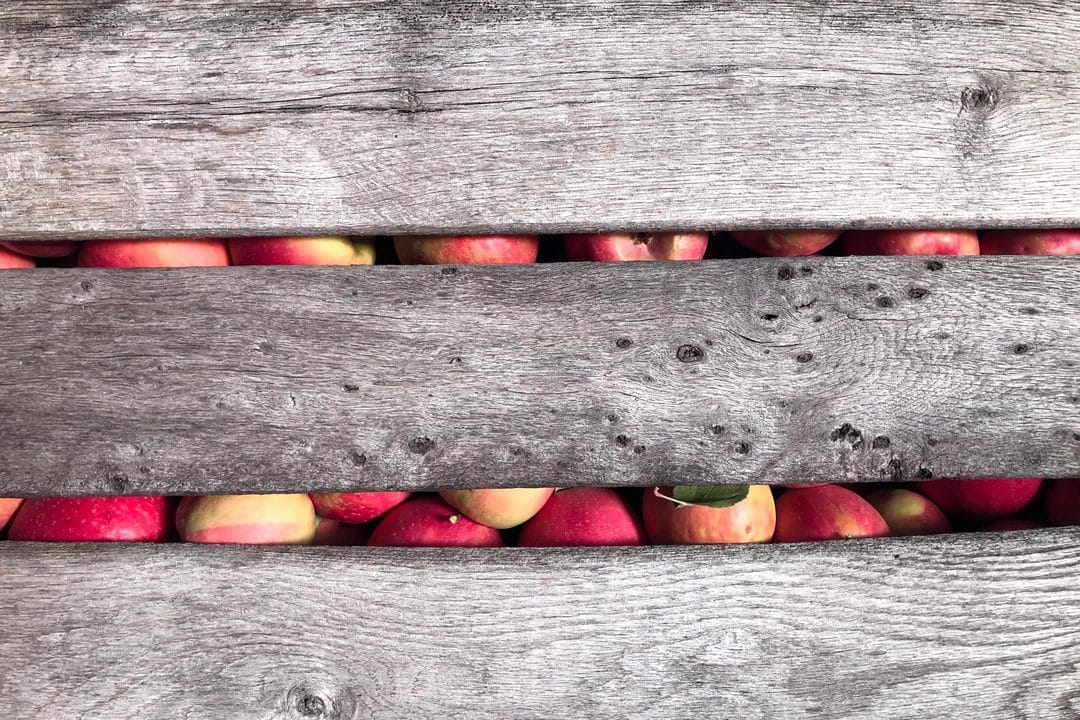
Somewhere around the third week of August, an apple tree that has been perfectly well behaved all summer suddenly decides to dump half its crop on the lawn overnight. One morning there is nothing to see; the next, you are stepping over windfalls on the way to the bins, and the plum tree two gardens along is doing exactly the same thing. This is the point where most people either panic-bake three crumbles in a weekend or leave the whole lot to rot into the grass, and neither approach gets much further than the following Tuesday.
A domestic apple tree in a reasonable year can drop anywhere from thirty to well over a hundred kilograms of fruit, and a mature plum tree isn't far behind it once it's established. None of that has to be wasted, and very little of it needs a proper fruit store, a dehydrator, or any equipment beyond a few wooden trays, some old newspaper and a freezer that already has room in it. What it does need is picking and sorting at the right moment, because fruit handled badly in the first hour after it comes off the tree is fruit you'll be composting by October regardless of how carefully you store it afterwards.
Picking at the Right Moment, Not by the Calendar
Fruit doesn't check a calendar before it ripens, so the twist test beats guessing by date every time. Cup the apple in your palm, lift it and give it a quarter-turn — if it comes away cleanly with the stalk still attached, it's ready; if you have to tug or wrench it, leave it another few days and try again. Plums are less forgiving about timing than apples. Pick them a day too early and they never properly sweeten off the tree, since stone fruit doesn't go on ripening in storage the way apples do; pick them a day too late and the wasps have usually got there first, especially on a warm week with fruit already splitting on the branch.
Check the ground under the tree as often as you check the branches themselves. A windfall that has been lying in wet grass for even twelve hours is already bruising from the inside, and that damage doesn't show on the skin until days later — by which point it's sitting in a storage tray next to forty good apples, quietly turning the whole batch. Pick up windfalls daily during a heavy drop, not weekly, and treat anything with a soft patch, a wasp hole or a slug trail as kitchen fruit for that week rather than storage fruit for November.
Sorting the Keepers from the Eat-Now Pile
Not every apple variety is built for storage, and treating a Discovery the same way you'd treat a Bramley is how good fruit ends up wasted for nothing. Early varieties — Discovery, Beauty of Bath, and the first Gala types off a garden tree — are watery and short-lived, so eat them within a fortnight or turn them into juice, because they turn mealy in a store long before Christmas ever arrives. Bramleys cook down beautifully and freeze well as purée, but they don't hold their shape as whole stored fruit much past November unless conditions are genuinely cold and dark. The real keepers are the later, harder-skinned varieties.
Egremont Russet, Blenheim Orange, most Cox types and anything sold locally as a "late keeper" will happily sit in a cool store from October through into February, sometimes March, and several of them actually improve in flavour after a few weeks off the tree as the starches convert to sugar. If you inherited an unlabelled tree with a house move and have no idea what it is, the storage test is simple enough: pick one, wrap it, check it again in three weeks. If it's still firm and hasn't browned around the core, you've got a keeper on your hands and can store the rest of that tree's crop with confidence.
Wrapping and Storing Without a Proper Fruit Store
You don't need a Victorian apple loft to store fruit properly — a shed, an unheated garage or a spare room that never sees the central heating will all do the job, provided the temperature sits somewhere between about 2°C and 7°C and stays fairly stable. Wrap each keeper individually in a sheet of newspaper, twisting the ends closed, and lay them in a single layer in a shallow wooden tray so they aren't touching. Slatted wooden trays from B&Q or Wilko run around £8–£15 depending on size, but free wooden wine crates from a local off-licence do exactly the same job for nothing, and stacking several with a gap between each tray keeps air moving around the fruit.
Skip the plastic crisper drawer for anything beyond a week's worth of eating apples. Stored fruit gives off ethylene gas, and sealed plastic concentrates it around anything nearby — including any potatoes, carrots or other apples sharing the same box — which speeds up softening and sprouting rather than slowing it down. Check the trays every one to two weeks through autumn and winter, and remove anything that's started to brown or weep before it touches its neighbours. The old warning about one bad apple spoiling the barrel isn't folklore; it's basic microbiology, and a single rotting fruit left in a tray of forty will visibly spread mould to the ones touching it within a week.
Plums Don't Sit Around Waiting
Plums have none of the apple's patience. Left at room temperature they're often past their best within three or four days, so unless you're eating a bowlful daily, freezing is the realistic option for anything beyond what you can get through fresh. Halve the fruit, twist out the stones, and lay the halves cut-side up on a tray lined with baking paper so they freeze separately before going into a bag — do that step and you can pull out a handful at a time all winter instead of chiselling at one solid block. Skin-on is fine for cooking later; nobody peels a plum for a crumble.
Freezing raw halves works well for pies, crumbles and jam later on, but if you care about the fruit holding some shape rather than collapsing entirely, stew it first with a splash of water and next to no sugar, then freeze the stewed fruit in tubs instead. The texture softens either way once it comes out of the freezer months from now, so there's not much point pretending the raw-frozen route keeps any real bite — it doesn't, and treating it as a texture decision rather than a correctness one saves a lot of second-guessing at the chest freezer.
Turning a Glut into Something Worth Keeping
Chutney is the honest answer to a windfall pile too bruised or wasp-nibbled for the fruit bowl but still perfectly good once the damaged bits are cut away. A rough working ratio that holds up for both apples and plums: for every kilogram of prepared fruit, use around 300g of onions, 250g of sugar, 300ml of vinegar and a couple of teaspoons of mixed spice, simmered slowly for an hour or more until it's thick enough that a wooden spoon dragged across the bottom of the pan leaves a trail. Sterilise jars first — ten minutes in an oven at 140°C, or a hot dishwasher cycle with no drying agent, does the job without faff — and the chutney will keep for months in a dark cupboard, improving over the first six weeks as the flavours settle.
Apple sauce is quicker and asks for almost nothing: peeled, cored, chopped apples simmered with a splash of water until they collapse, sieved or blitzed smooth, and frozen flat in bags or ladled into jars. Windfalls with bruising cut out are exactly the fruit to use here — the finished sauce doesn't care that the apple wasn't pretty enough for the fruit bowl, and it's the single fastest way to turn a wheelbarrow of "not sure what to do with these" into something you'll actually reach for through winter.
When You've Got More Than Any One Kitchen Can Use
Once you're past what your own kitchen, freezer and store cupboard can realistically absorb, the fruit is worth more shared than composted. A lot of towns now have a community orchard group or a local branch of Common Ground's national Apple Day network, which runs events around 21 October each year built almost entirely around surplus garden fruit — bring a crate along and it gets pressed, tasted or given away on the day. Several counties still have a mobile apple press that visits village halls each autumn for a small fee per kilogram, turning fruit that would otherwise sit under the tree into bottled juice you actually get to keep. Failing either of those, the Olio app, a school newsletter, or simply a box left by the front gate with "help yourself" chalked on it will clear a glut faster than any amount of individual baking ever will.
The Mistakes That Actually Rot a Whole Batch
Most storage failures trace back to a handful of avoidable habits rather than bad luck with the weather.
- Storing bruised or wasp-damaged fruit alongside perfect fruit "to sort out later" — sort it before it goes in the tray, not after mould has already spread to its neighbours.
- Sealing apples in plastic bags, which trap condensation and speed up rot rather than protect against it.
- Stacking fruit several layers deep in a crate with no way to check the fruit at the bottom without unloading the whole thing — shallow, single-layer trays cost more shelf space but save far more fruit.
- Forgetting mice can get into a shed or garage over winter just as easily as they get into a house, and a colony that finds a tray of apples in October will still be living off it in January; a metal bin with a lid solves this in most sheds for under a tenner.
- Leaving a store unchecked for a month at a time. Fruit that's rotting quietly at the back of a shed does its damage in the dark, and by the time the smell reaches the door it's usually too late for anything but the compost heap.
None of this needs to be complicated, and it definitely doesn't need buying in. A tree that drops fruit faster than anyone can eat it is still a good problem to have — the alternative, a bare tree and an empty fruit bowl come February, is the one actually worth avoiding.