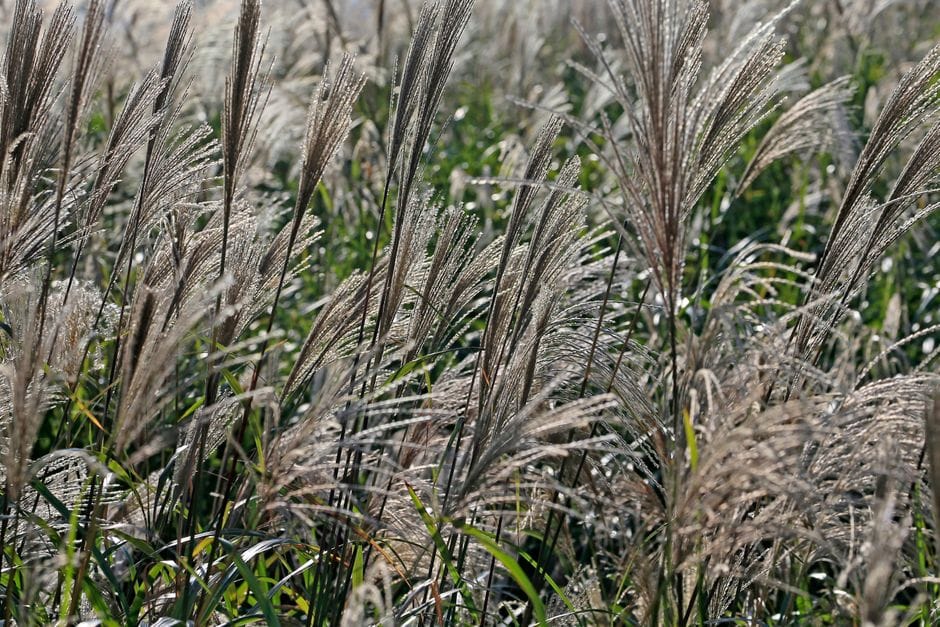
If you left the borders standing over winter, as the wildlife books rightly suggest, late winter is when that decision comes due. The faded seed heads have done their job, and the new growth needs light and air to push through.
Why we leave them
Standing stems and seed heads earn their keep all winter, catching frost, feeding finches and sheltering insects. But by late winter they are collapsing and going soggy, and leaving them longer means cutting around tender new shoots.
Deciduous grasses
The grasses that turn brown and die back, such as miscanthus and calamagrostis, get cut right down. Gather the whole clump in one hand like a ponytail and shear it off a few centimetres above the ground before the new growth appears.
- Cut deciduous grasses hard, almost to the base.
- Do this before new shoots emerge to avoid trimming them.
- Shred the dry stems for the compost or a mulch.
Evergreen grasses are different
Do not cut evergreen grasses like festuca or stipa to the ground; it can kill them. Instead, simply comb through them with gloved fingers to pull out the dead, brown material and leave the living blades.
Tidy the perennials too
Cut the dead stems of herbaceous perennials down to the ground while you are at it, taking care not to tread on the fat buds emerging at the base. A gentle scattering of compost over the cleared crowns sets them up for the surge of spring growth.