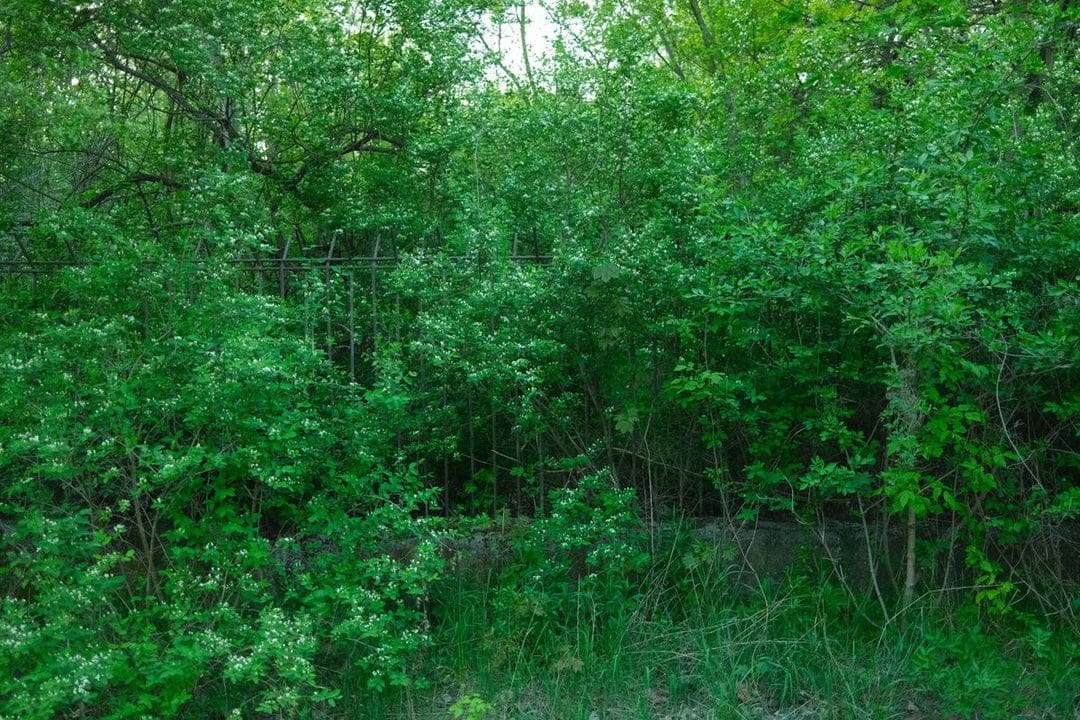
There is a stretch of fence line, in a lot of British gardens right now, that nobody quite looks at directly. It is dense, oddly architectural, a shade too green for late July, with reddish canes pushing up through last year's dead growth like something that has decided the garden belongs to it now. Most people walk past it on the way to the shed and think, vaguely, bamboo, or something the previous owners planted. By the second week of August it will be topped with loose sprays of cream flowers, and that is usually the point at which somebody finally looks it up. Late July, while it is still just leaves and canes, is actually the better moment — this is Japanese knotweed at its most identifiable and its most manageable, and what you do about it in the next few weeks matters more than most gardening jobs on your list. Leave it until the flowers open in August and every neighbour walking the dog past your fence will have their own opinion about it.
What You're Actually Looking At
The stem is the giveaway before anything else. Japanese knotweed grows in a distinctive zigzag between each leaf node, and the cane itself is hollow, jointed like bamboo, and usually speckled with purple or maroon flecks rather than plain green. The leaves are broad, heart- or shovel-shaped, arranged alternately up the stem, and by late July they can easily be the size of a side plate. A mature, untreated stand will stand somewhere between one and three metres tall and can spread into a solid thicket several metres across within a couple of growing seasons, choking out anything smaller that tries to compete with it. Snap a piece of stem and it breaks cleanly, almost woody, quite unlike the soft stringy stalks of bindweed, which is the plant most commonly mistaken for it by anxious homeowners doing their own late-night research. Back in spring it can push up several centimetres a day, which is where its reputation comes from — by late July that explosive phase is already over, and what's left is simply the fully grown thicket standing there in plain sight.
That confusion runs both ways, and it's worth sitting with for a moment. Ornamental Persicaria, ordinary dogwood with red winter stems, even ordinary docks that have had a good summer, get reported to surveyors every week by people convinced they've found knotweed in the border. A wrongly flagged survey can delay a sale by weeks while everyone waits for a specialist to come and say "that's a dogwood," which is its own kind of expensive mistake. If you're not certain, photograph the stem joints and the leaf shape clearly and send them to a Property Care Association member firm before you say the word "knotweed" to a mortgage valuer, a neighbour, or anyone else who might repeat it.
The Law Doesn't Say What Most People Think
Here is the part almost everyone gets backwards: it is not illegal to have Japanese knotweed on your land.
It isn't a notifiable weed, and there's no statutory obligation to report it or eradicate it simply because it exists in your garden. What the law actually targets is what you do with it once you know it's there. Section 14(2) of the Wildlife and Countryside Act 1981 makes it an offence to "plant or otherwise cause to grow in the wild" any plant listed in Schedule 9, and knotweed sits on that list — so allowing it to spread onto a neighbour's land, into a watercourse, or onto public land can, in theory, carry a fine of up to £5,000 and six months in prison on summary conviction, rising to an unlimited fine and up to two years on indictment. In practice, prosecutions under Schedule 9 are rare, but the more common route now is a Community Protection Notice under the Anti-social Behaviour, Crime and Policing Act 2014, which a local authority can issue if a neglected stand is affecting a neighbour's quality of life. Ignore a CPN and you're looking at a fixed penalty of £100, or a court fine up to £2,500 for an individual and £20,000 for a company if it goes that far. Separately, once you cut it down or dig it out, every scrap of stem, leaf and rhizome-contaminated soil becomes controlled waste under the Environmental Protection Act 1990, and Section 34's duty of care means it has to go to a licensed carrier and a permitted landfill site — not the green bin, not the compost heap, not a bonfire.
The Mortgage Question Changed in 2022, and Most People Haven't Caught Up
For years, the working rule among surveyors was crude but universal: knotweed within seven metres of a building meant trouble getting a mortgage, full stop. RICS scrapped that seven-metre rule in guidance that came into effect in March 2022, after research and a 2019 House of Commons Science and Technology Committee report concluded it was, in the committee's own words, a "blunt instrument" that overstated the actual structural risk. Knotweed rhizome rarely travels more than two to four metres from the visible canes in most cases, and RICS now accepts that established buildings with normal foundations face very low risk of real structural damage from it — the bigger cost has always been to amenity and resale value, not to brickwork. The current framework works on management categories rather than a fixed distance: broadly, knotweed within three metres of a boundary with limited spread gets treated as low-impact and rarely triggers a mortgage retention, while anything closer to the building itself, spreading, or affecting a structure needs a proper management plan before most lenders will proceed.
Even so, don't assume every mortgage broker or high-street solicitor has updated their thinking to match. A good number of valuers are still working from muscle memory shaped by the old seven-metre rule, and it's not unusual to hit unnecessary friction on a sale even when the actual RICS category is a mild one. If knotweed shows up on a survey, get a PCA-registered specialist to produce a written management plan against the current categories rather than letting a nervous valuer default to the old assumption — it's the single most useful document you can hand a lender or a buyer's solicitor.
What Removal Actually Costs
There are two real approaches, and they sit at very different price points for very different reasons. Herbicide treatment — glyphosate applied to the foliage, repeated two or three times a season — is the cheaper route for most gardens, typically running from around £1,000 up to roughly £5,000 depending on the size of the stand, but it isn't fast: most specialists quote three to five growing seasons before they're confident the rhizome is dead, and a treatment plan sold with a ten-year insurance-backed guarantee (an add-on that can cost anywhere from about £75 to close to £3,000 depending on the provider and the size of the job) is what most mortgage lenders actually want to see. Excavation and disposal is the option for people who need certainty now rather than in three years — commonly a buyer with a completion date, or a seller trying to close a sale that's already stalled — and it costs considerably more precisely because the rhizome can sit two metres deep and every gram of contaminated soil has to be dug out and carted away as controlled waste; costs from around £5,000 into the £10,000–£20,000 range for larger or deeper infestations aren't unusual once disposal and reinstatement are added in.
- A real example from a firm's own case file: a three-bedroom semi in Cardiff with roughly 15 square metres of knotweed went with a three-year herbicide programme and a ten-year guarantee, paid in instalments, for a total of £2,450 — a fairly typical outcome for a garden-sized stand rather than a boundary-wide infestation.
- Standard packages from established firms often bundle a ten-year plan with an insurance-backed guarantee for a site up to around 25 square metres at roughly £1,990 plus VAT, plus a separate small annual insurance premium.
- Whichever route you choose, use a Property Care Association-accredited contractor. It isn't a legal requirement, but it is what almost every mortgage lender and conveyancing solicitor will actually ask for by name.
The catch nobody mentions in the sales brochure: an insurance-backed guarantee only protects you if the original treatment company goes bust, in which case the underwriters arrange a different PCA contractor to finish the job or handle regrowth — it does not cover a botched DIY attempt with a supermarket weedkiller, and most standard buildings and contents insurance policies exclude Japanese knotweed damage entirely, so there is no fallback if you skip the professional route and it goes wrong.
What To Do This Week, While It's Still Identifiable
Don't strim it, don't mow over it, and don't try to dig it out yourself on the assumption that more effort equals more progress — every fragment of rhizome left behind, and even small pieces of stem thrown on a compost heap, can regrow into a new stand, which is exactly how gardens end up with knotweed in three separate corners instead of one. What you should do instead is straightforward: photograph the stems and leaves clearly now, before the flowers arrive and change how it looks to an untrained eye; get a PCA member out for an identification and, if it's confirmed, a written quote comparing herbicide and excavation costs for your specific area of growth; and if any part of the stand is within a few metres of a shared boundary, tell your neighbour before a surveyor or an estate agent does it for you. A conversation now, while nobody's trying to sell anything, tends to go a great deal better than one forced by a mortgage valuer three weeks before completion.