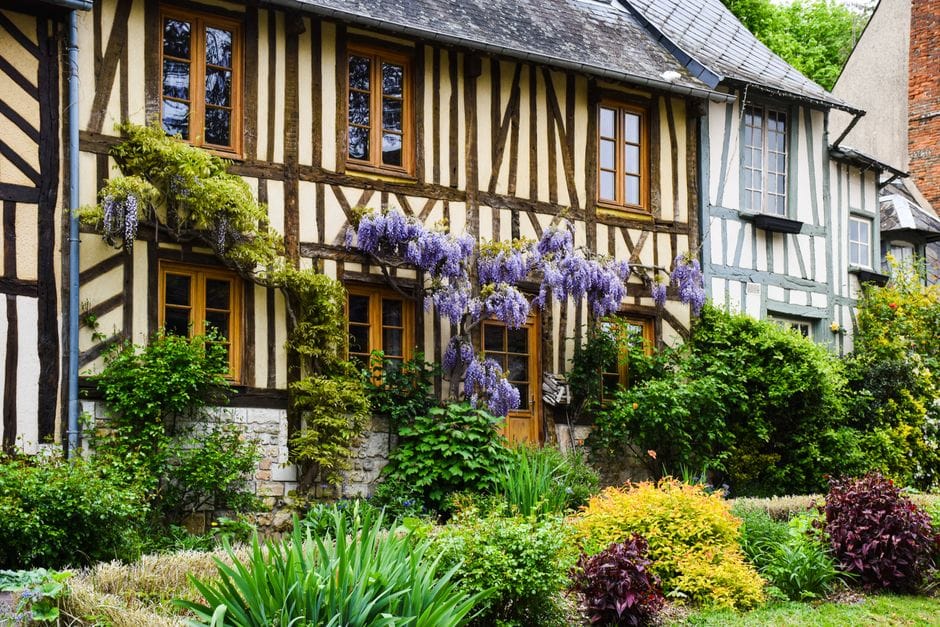
A wisteria smothered in scented flowers is one of the glories of late spring, while a neglected one is a tangle of whippy growth and barely a bloom. The difference comes down to two prunings a year, and this is the second of them.
The two-cut system
Wisteria is pruned twice: a tidy-up in summer and a harder cut in late winter. The summer prune shortens the long whippy shoots, and now, while the plant is bare, you shorten those same stubs further to concentrate its energy into flowers.
The winter cut
With the leaves gone you can see the framework clearly. The job is quick once you know what you are aiming for.
- Cut back the shoots shortened in summer to two or three buds.
- These short spurs are where the flower buds form.
- Tie in any new stems you want to extend the framework.
Telling buds apart
Flower buds are fat and round, leaf buds slim and pointed. Cutting to a couple of buds from the main stem keeps the plant compact and pushes its strength into those plump flower buds rather than endless leafy growth.
Other climbers
Late winter also suits a tidy-up of many other climbers while they are dormant. Cut back summer-flowering clematis hard, and thin out the oldest stems of an overgrown honeysuckle. Always check which group a clematis belongs to first, as the early ones flower on old wood.